Uncategorized

Breaking Beans Radio Show #22: Cornmeal, Tamworth Swine, and Dry Land Fish

Aired: 11/01/2017

In tonight’s show we visit with JR Damron, grist mill owner from EK3 Farm in Virgie, KY. Then Sister Kathy talks with Tim Sanders, who raises heritage pork, beef, chicken and goat varieties at Indian Creek Settlement Farm in Letcher County. Lastly, this episode closes with Neil Hunt, heirloom vegetable and dry land fisherman from Oppossum Fork Mini-farm in Racoon, KY.  These are not your typical corn, bean and tomato guys, so you won’t want to miss their stories.


Find other episodes and Breaking Beans stories here:

http://cfaky.org/blog

Download this and other past episodes here:

https://archive.org/details/@breakingbeans

The Breaking Beans Variety Radio Show airs on 88.7 WMMT (online too!) the first Wednesday of every month at 6pm featuring stories, interviews, recipes, and news from the food and farming worlds in the Appalachian region!

Hosted by Breaking Beans Fellow Sister Kathy Curtis.


breakingbeansWEBsm

Breaking Beans: The Appalachian Food Story Project is an initiative of Community Farm Alliance to tell the story of how local food and farming in Eastern Kentucky can contribute to a bright future in the mountains. Eastern Kentucky is at the point where it can foster a food system that is equitable and accessible to all, provides fresh nutritious food, and serves as an economic generator that builds community wealth. With a rich history of food and farming, stories of how Eastern Kentucky is already growing in that direction – and the challenges along the way – are important for informing people and policy alike.

Uncategorized

Breaking Beans Radio Show #21: Being Social

Aired: October 4, 2017

This month’s show features the social aspect of food and farming. First, host Sister Kathy Curtis goes to Clay County to visit at Old Homeplace Farm’s open house.  She talked with hosts Maggie and Will Bowling about why they decided to host an open house at their farm. Then she ventured to Big Switch Farm, where Joe Schroeder and Lora Smith shared with her about their Lost Fiddler mobile pizza oven. Then Cindy and Randy Shepherd from Meadow Branch Farm tell her all about why Eastern Kentucky is such a great place for honey. Lastly, she travels to Berea College for the Second Annual Kentucky Hunger Dialogue to interview Sociologist, Alisha Mays on her experiences in eastern Kentucky talking with folks about home provisioning.


Old Homeplace Farm’s Open House Hay Ride

Big Switch Farm’s Lost Fiddler Mobile Pizza Oven

Meadow Branch Farm (photo credit to Meadow Branch Farm Facebook)

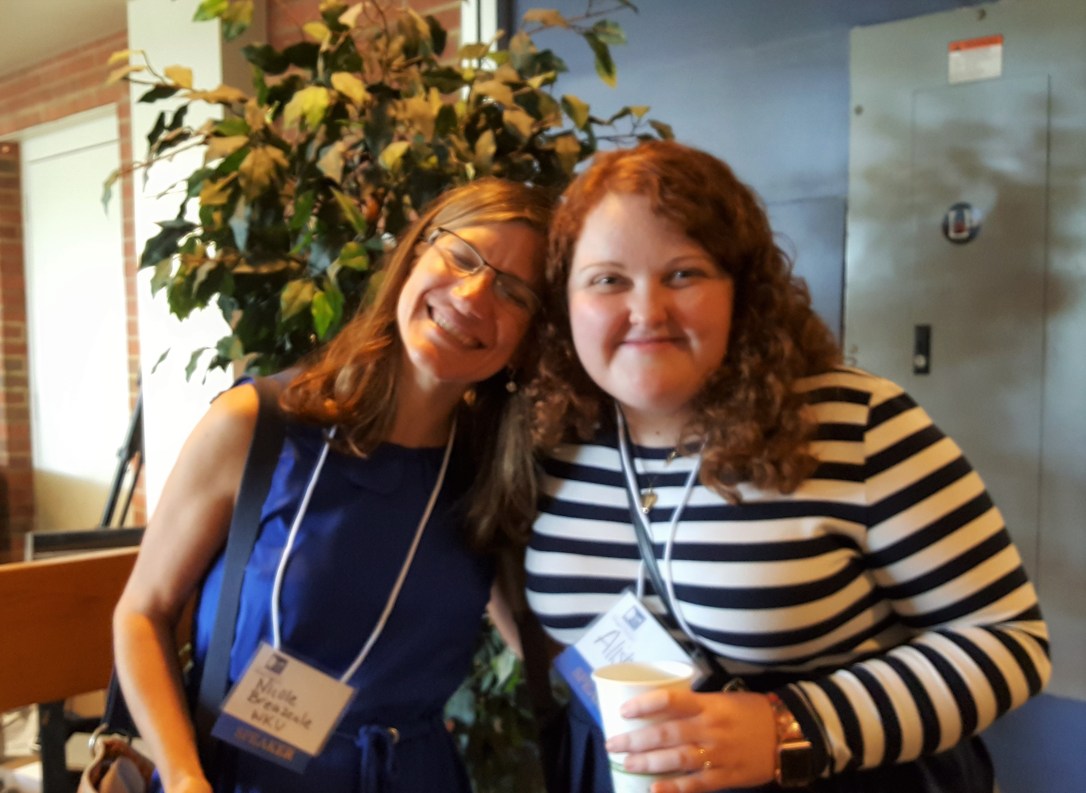
Nicole Breazeale with Alisha Mays (right)

Find other episodes and Breaking Beans stories here:

http://cfaky.org/blog

Download this and other past episodes here:

https://archive.org/details/@breakingbeans

The Breaking Beans Variety Radio Show airs on 88.7 WMMT (online too!) the first Wednesday of every month at 6pm featuring stories, interviews, recipes, and news from the food and farming worlds in the Appalachian region!

Hosted by Breaking Beans Fellow Sister Kathy Curtis.


breakingbeansWEBsm

Breaking Beans: The Appalachian Food Story Project is an initiative of Community Farm Alliance to tell the story of how local food and farming in Eastern Kentucky can contribute to a bright future in the mountains. Eastern Kentucky is at the point where it can foster a food system that is equitable and accessible to all, provides fresh nutritious food, and serves as an economic generator that builds community wealth. With a rich history of food and farming, stories of how Eastern Kentucky is already growing in that direction – and the challenges along the way – are important for informing people and policy alike.

Uncategorized

The Goforth General Store

By Sister Kathy Curtis

Inez is located just about as far east as you can get and still be in Kentucky.  Inez is the little town where, in 1964, President Lyndon Johnson declared his “War on Poverty”. Like the rest of the region, Inez, has had its share of economic upswings and downturns. And like the rest of the coalfield counties today things are grim. Martin County’s last working coal mine will close at the end of the month and so will it’s health center.

In the middle of this doom and gloom is a really bright spot of hope. Jared and Laken Goforth opened their general store just two months ago in response to the outpouring of prayer they had been hearing in their community. “God laid it on our hearts to do something for the community, so we opened this store.” Jared Goforth told me.

The Cain Building, where the general store is located, was built in 1936 and was a Texaco service station for a number of years. The building, which had been donated to the Martin County Historical Society had been damaged by a fire. When Jared Goforth, a talented carpenter and self-proclaimed jack-of-all-trades, was hired to repair the damage, he saw potential in the renovated space. “We wanted a place where the community could come,” Jared told me. “We decided on calling it a “general store” because it has all sorts of things in it. Plus it sounds old-timey.”

The store has a great mix of items provided by at least six community members in addition to the. The Sudsy Gals handmade soap fills a hutch on one side of the room sandwiched between a rack of shoes, for sale, and wall hangings done by Laken.. “I don’t get much time for that right now,” Laken told me, holding her nine month old son Finley. Down the middle of the store are shelves filled with knit dishcloths, utensils with horn handles, hand painted jars and of course UK themed Christmas ornaments, all handmade by Jared and Laken’s friends and neighbors. “It’s their store too,” Jared said.

The store also sells Goforth General Store jellies, relishes and sauces. I asked Jared if he processed them himself. “No, actually those are from the Amish. But, we are working with KCARD (Kentucky Center for Agriculture and Rural Development) and next year we hope to have our micro-processing certification and be able to sell our own.” He is also planning on getting the store registered as an official Kentucky Proud Farm Store so he can sell not only his own products but those created by other microprocessors in the area.

“All the produce I sell comes from our farm and from a couple other farmers in the area. Sometimes a farmer I know will come in with some stuff he had left [from market] and I’ll buy it from him”. Currently, “we are selling mums now from Griffith Family Farms in Johnson County.” The Goforth General Store offers fresh meats from Appalachian Meats in Prestonsburg too. “That’s where I take my pigs to be processed. We sell our pork here too” said Jared.

Our tour around the store ended up back in the corner with the old fashioned cash register, where antique tins, boxes and bins were full of penny candy. “Which is five dollars a pound now.” Jared told me. The back corner is also where Laken had spent most of her time while I was visiting putting together orders that had been coming in for the Miner’s Bucket lunch, something I had been thinking about since leaving Floyd County.

I had timed my trip to arrive about noon-thirty, hoping to catch the tail end of the lunch rush. Yes, the Goforth General Store also sells hot lunches. The Miner’s bucket lunch is a sandwich, a bag of chips and a drink for $5.00 and today’s special was fried bologna on white bread. Now, I love whole grains and fresh veggies with the best of them, but every now and again you have to wander down memory lane; for me, that’s fried bologna on white bread with a touch of mustard. Yum!

As Laken handed me my sandwich I asked her why a general store?

“We wanted to do something for our community and this seemed like it. It’s a big leap of faith. We love it here and we don’t want to have to leave. We want our kids to have the same thing we had; growing up in the country with family around.” Jared and Laken, who both grew up in Martin County,  have three children and like most mountains folks, family and place are very important to them.

As I headed out of the store, brown bag in hand, I noticed the iconic picture of President Johnson. He was talking with Martin County resident, Tom Fletcher, on that sunny afternoon fifty-three years ago. “There are some folks who wonder if that was such a good thing for us,” Jared mentioned as he bid me goodbye. Personally, I’m not sure either, but there is one thing I am pretty clear on: Eastern Kentucky is full of people like Jared and Laken Goforth.  People who are doing what they can to continue to live and raise their children in the region. For them, returning to some of the old ways like general stores, Friday night “pickin and grinnin” and fried bologna sandwiches is a real good thing.

The store is open Monday through Friday from 10:00 to 6:00 and the first Saturday of the month. “We are trying to open every other Friday evening for music.” Jared, an accomplished fiddle player too, says that “having a safe, family friendly place to come is important to the community too”. According to a recent post on their Facebook page, “Pickin and grinnin Friday at 7pm. We will have polish sausages and soup beans. Bring a chair! And all pickers and singers are welcome to come!!” Hope to see you all there.


Uncategorized

Breaking Beans Radio Show #20: Guy Talk

Aired: September 6, 2017

In this episode Sister Kathy Curtis visits the Perry County KY Farmers’ Market to talk with Brandon Stidham, Perry County High School Senior and Local Farmer. The she headed over to London, to chat with Wayne Riley, the Executive Director of the Laurel County African American Heritage Center Inc., about their urban farm and community commercial kitchen. And last, but not least, this episode features Jason Brashear, Hindman Settlement School’s new Foodways Director.


Brandon Stidham, High School Senior, Perry County Farmers’ Market Vendor

Wayne Riley, Executive Director of the Laurel County African American Heritage Center Inc.

Jason Brashear, Director of Foodways, Hindman Settlement School

Find other episodes and Breaking Beans stories here:

http://cfaky.org/blog

Download this and other past episodes here:

https://archive.org/details/@breakingbeans

The Breaking Beans Variety Radio Show airs on 88.7 WMMT (online too!) the first Wednesday of every month at 6pm featuring stories, interviews, recipes, and news from the food and farming worlds in the Appalachian region!

Hosted by Breaking Beans Fellow Sister Kathy Curtis.


breakingbeansWEBsm


Breaking Beans: The Appalachian Food Story Project is an initiative of Community Farm Alliance to tell the story of how local food and farming in Eastern Kentucky can contribute to a bright future in the mountains. Eastern Kentucky is at the point where it can foster a food system that is equitable and accessible to all, provides fresh nutritious food, and serves as an economic generator that builds community wealth. With a rich history of food and farming, stories of how Eastern Kentucky is already growing in that direction – and the challenges along the way – are important for informing people and policy alike.

Uncategorized

My Week on the Farm

By Sister Kathy Curtis

First off, let me clarify that in no way do I consider the week I spent at Four Petal Farm a typical week for a small farmer. Cathy and John Rehmeyer, owners of Four Petal Farm,  were able to take a week’s vacation in May because their primary focus is cool weather crops, like  brassicas, that they grow all winter. So, when they asked if I could stay at the farm to watch over things, I knew there would be little heavy work to be done. Cathy pointed out that it was a way to get some time away and enjoy the solitude. The fact I live at a monastery and this was a selling point for getting away from home for a week, did not slip by me.

I visited the farm a week before the Rehmeyers were to leave for vacation to get the lowdown on the routine chores that needed to be done and for my own peace of mind. Since I started working around farmers, I have come to recognize and appreciate the hard work that goes into growing the food that I used to take for granted.

I wanted to be sure I was up to the task. So, John Rehmeyer and I walked around the farm. He instructed me on what needed to be done and when and I practiced things like cranking up the high tunnel sides. My main responsibility was making sure the animals were fed and that the high tunnel was watered and the sides opened and closed every day. I felt like I was up to all the tasks, except one. I did not feel comfortable walking up and down the steep hillside twice a day to feed and water the goats. Fortunately, John had a neighbor who was willing to take on that chore.

John left me a simple schedule for the chores that looked something like this: High tunnel: open tunnel sides and door, water as needed, harvest zucchini and summer squash as needed, close at night. Animals: morning feed and water dogs and cats, water rabbits; afternoon feed dogs, rabbits and parakeets and spray iguana. Make sure everyone stays watered. Sounds simple enough, right?


Here’s my journal entries about what happened that week:

Friday, day one: I got to the farm by 9:00am. High tunnel sides were open and Rick (the neighbor) had already fed and watered the goats so I did the rest of the morning feedings and turned on the drip irrigation for the high tunnel. It had to run for about two hours. Then I remembered that the seedlings needed to be watered from overhead which required that I change from drip to hose. I remembered a little too late that you had to turn the water off before changing from drip to hose. I won’t forget that again. I struggled with putting the sides down on the tunnel. Gravity won.

Saturday, day two: I slept well and turned off the 6:30 alarm (after all it was Saturday), so at 7:45 I realized I had work to do. I went to the tunnel first because I didn’t know how hot it would get when the sun hit it with the sides down. Cranking the sides up was not too hard. I noticed I had a bruise from where the handle had hit my arm the night before. I decided that I would probably gain some arm strength this week. The tunnel only needed the drip ran so there were only two trips up to the spigot.

Sunday, day three: I did not want to get up.Then I remembered that dogs, cats and rabbits were depending on me and all those plants in the high tunnel! According to the gizmo in the window, the humidity was 99% and it wasn’t even 10:00. Climbing the hill was getting easier but cranking up the tunnel sides was still hard and bending over to harvest the squash had my back reminding me that my day job was at a desk. One of the hardest things is remembering to change boots when going between the animals and the tunnel to avoid contaminating the produce. And the rabbit house needs to be cleaned out but I think I will wait until the humidity drops and hopefully the odor will too.

Monday, day four:  It was cooler today so I cleaned out the rabbit house and that’s how I found out both Rick and I had been feeding the rabbits. No wonder they haven’t been excited to see me. In the high tunnel, I found evidence of squash vine borer this morning while harvesting. According to my research, by the time you see the damage it is too late to stop it. I’m feeling a little anxious today.

Tuesday, day five:  I have been watching the upper field to see if it needs water. It has been hot but they are calling for rain tonight so I think it will be OK. There are so many decisions to make. It’s not like at home where we are growing some peppers and tomatoes and if something happens we can just go buy them. These plants are a family’s livelihood. It takes a lot of faith to be a farmer.

Wednesday, day six: There is a rhythm to the day that starts and ends with the dogs. They are the most persistent. I went to Pikeville today to do an interview and raced back to the farm to close up the tunnel and feed everyone before a really bad storm hit. The power went out for a while so I sat on the front step and just watched the mist and the birds.

Thursday, day seven: I am harvesting about three bags a day of squash and zucchini. It is really neat to see the bees wallowing in the pollen in the squash flowers. It’s almost like they are drunk with it. I had to be in Whitesburg this evening so I left the farm about 4:00 after feeding and watering everyone. I had a real problem trying to get the tunnel door shut. I wasn’t expecting on being back until late and knew the deer would see an open door as a gilt edged invitation to supper. After searching with no luck for bungee cords, I ended tying the door shut with my bandana. When I got back to the farm and checked, I was relieved that the door shut with no problem and nothing had suffered from the heat.

Friday, last day: Because both Rick and I both fed the rabbits earlier in the week, the feed was gone. So I decided to go to the local Walmart and buy some rabbit food. After three stops with no luck I finally found some at the Tractor Supply in Paintsville, a round trip of fifty miles.

Walking up the hill to the rabbit house for the last time before returning home, I looked over and there sitting on the steps of an out building were four little kittens. It appears that one reason the cats were so crazy to be fed all week was that one of them was nursing her brood.

Later that afternoon, as I drove out the holler, I stopped to say goodbye to Rick and thank him for all his help. He invited me back anytime to “sit on the new deck a spell”. He reminded me of what is good about country living. The work is hard, the outcome isn’t guaranteed and the pay is minimal at times but the rewards are plentiful. I not only had a bag full of zucchini, I went home with my heart adjusted. Like the dogs resting in the shade, the bees drunk on pollen and the kittens frolicking under the shed, I had stepped back into the rhythm of nature. And found peace and fullness there.

Several weeks have passed since my experience at the Four Petal Farm. I have fallen back into my routine of work, prayer and leisure. As I was writing this piece, the thing I remembered most about my time on the farm was how vital I felt. I had an important role. From making sure the plants and animals were fed and watered to harvesting the squash, my hands were needed. As I sat on the porch, sharing the evening cool with the dogs, I understood the difference between making a living and making a life. Whether growing beets or beef, farming at any level is hard work. In this culture of fast food and faster internet, farming is a lifestyle that has to wait, for the rain, for the harvest, and for the calf to be born.  What I hope they don’t have to wait for is our gratitude. When you sit down to your next meal, why not say a prayer of thanks for farmers. Or better yet, the next time you are at the farmers’ market, thank them face to face.