Uncategorized

From Market Vendor to Entrepreneur

Written by Sister Kathy Curtis, Edited by Maggie Smith

My first experience with a farmers’ market was in 2011 in Floyd County, Kentucky where I volunteered to help the farmers get set up, run errands, and put out about a million signs. I decided I wanted to help them because I am interested in anything that can bring income into our region and who doesn’t like fresh food. In my six years working with the market vendors I came to realize that farmers’ markets are not just a place to buy fresh food straight from the farmer but also an incubator for small businesses.

Over the years, I have had the privilege to make friends with several women who started out at a farmers’ market and have expanded their business beyond summer afternoons.

Before I tell you their stories, I wanted to share that Community Farm Alliance was a driving force behind the passing of Kentucky House Bill 391 (which was signed into law November 1, 2003) It opened a lot of doors for farmers like Benette who grow a product and then “add value” to it by canning, preserving or baking it into something that can be sold for a higher price. Limits for home processors, like Benette, is that their products can only be sold at farmers’ markets, certified Farm Bureau roadside stands or from the farmer’s home. Commercial licenses don’t have those limitations. And two local women have used their local farmers market as an entry into retail sales with their commercially processed products.

Here are their stories, and the on the ground results of how CFA has supported the farmer:

Benette Howard is definitely a farmer. She and her husband own one farm in Johnson County and she inherited two others. For her, farming was a way of life, raising everything, even beef, pork, and chickens. “You didn’t go to the store every time you wanted something. If you didn’t have it, you did without” said Bennette. She also told me working in the garden was instilled in her as a kid. She remembered when she first started helping her uncle, he set her to pulling weeds in the onions. “I guess they were easy to tell from the weeds.”

Benette first set up at the Floyd County Farmers’ Market towards the end of 2012 market season bringing pumpkins, gourds and colored corn. She did well enough to plan on setting up the entire 2013 season. However, the cool wet spring of 2013 put her behind and that’s when she heard about home based processing. Home based processors may produce and sell low risk products such as fruit jams, jellies and syrups, fruit butters, baked goods, prepackaged mixed greens or herbs, and dried fruits, vegetables, nuts or herbs. She started making Bea’s Jams & Jellies and they went over so well she added baked goods. “When I wouldn’t sell all my fresh stuff, I brought it home and canned it to resell at market” this was Benette’s strategy.

Benette now sells her canned goods during season at both the Floyd County and Pikeville farmers markets. And once the markets close down she still has “a lot of people that call wanting canned stuff and baked goods”.
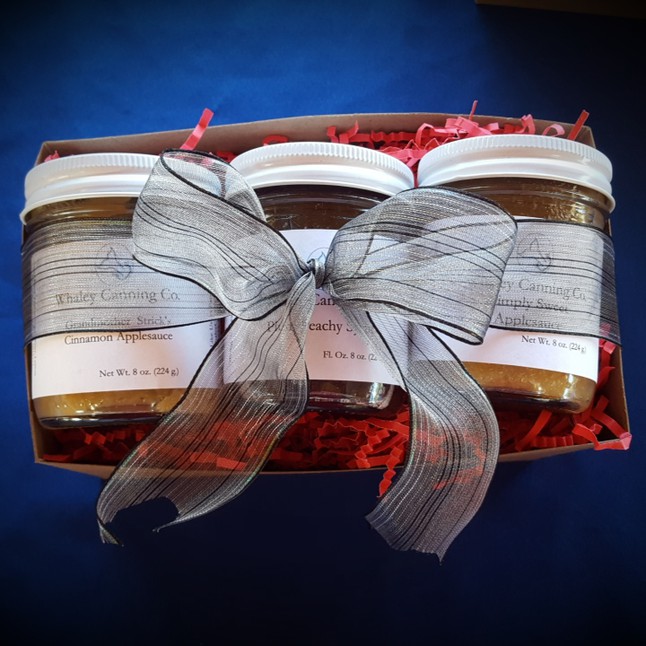
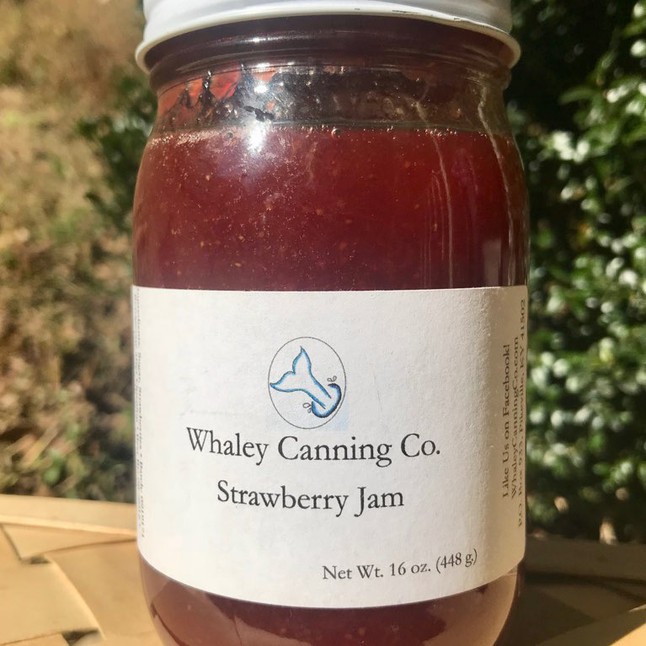
What goes better with baked goods than jams, jellies, and syrups? The Pikeville Market has helped other young entrepreneurs become thriving businesses.  Such as Whitney Whaley, of Whaley Canning Co., started her business just this year after a whirlwind tour of classes and certifications. Whitney was looking for a cottage industry she could do soon after moving to Pikeville and hit upon canning and selling fruit sauces and syrups using old family recipes, like Grandma Strick’s Apple Sauce.

After attending UK’s Food Innovation Center’s Better Process Control School, offered this past spring at the Eastern Kentucky Farmer Conference, Whitney was able to commercially process her products using the commercial kitchen at the Floyd County Extension Office. She met up with Joyce Pinson of the Pikeville Farmers Market who convinced her to sell her products at the market. Business was so good that now, less than one year from starting, Whitney has her products in several local retail stores as well as on her own online store.
A little closer to I-75, in Hazard, you will find Emily Whitaker who like most of us, loves coffee. She loves it so much that when offered a coffee roaster with all the trimmings, she remodeled half of her basement to install a manufacturing kitchen so she could sell locally roasted coffee. Windy Hills Coffee, roasted in Viper, Kentucky made its debut at events in and around Hazard including creating a special blend for an event in Hazard called A Seat at The Table-India where community members can come together and share a meal from a different culture. The reception was so good that Windy Hills coffee can now be found in retail outlets in Hazard and soon to be found in Prestonsburg and Whitesburg too. As market manager for the Perry County Farmers’ Market, Emily’s connection with farmers opened another avenue when farmer friends started adding Windy Hills coffee as a specialty item to their CSA shares.

As noted earlier, farmers’ markets have been entry level opportunities for farmers to sell their products. Most market vendors expand their businesses, like Benette, by having customers come to the farm or like Whitney and Emily through retail markets. But, a few vendors make the scary leap to brick and mortar establishments.

Kristin Smith raises heritage beef and pastured pork in Whitley County on Falkner Bent Farm. She started selling her premium meat products at the Whitley County Farmers Market but sales were slow. “I couldn’t drop my prices so I decided to make tacos so people could taste the difference in my product and buy it. Pork belly tacos. Brisket tacos. Whatever cut wasn’t moving. And it worked. I sold out every week”, she told me in an interview earlier this year.

The Whitley County market vendors became a really tight group and it wasn’t long before they decided they had all they needed, bread, produce and meat, to open a brick and mortar restaurant. And soon the popular Wrigley Taproom and Eatery, a farm to table restaurant in Corbin, Kentucky, was established.


The newest entrepreneurs to using a farmers’ markets as a springboard into business are Lisa and Amy Bourque of Acres of Grace Farm and Bakery in Clay County. Lisa and Amy have been farming on Acres of Grace for about eight years. They believe in being as self-sustaining as possible, so gardening was an easy choice for them

They started selling at the Clay County Community Market about four years ago but what’s interesting is that they did not start by selling produce but instead entered the market to sell Lisa’s artwork, “with a small tray of baked apple hand pies” Lisa told me. Once she saw how much the community loved homegrown and homemade food, she decided to pursue her passion for baking.

The Acres of Grace Bakery, located on Big Creek in Clay County opened this past November. When asked why open a restaurant in such a rural area? Lisa replied “because we really wanted to be a part of the community on a larger scale than what we could produce for farmers’ market. People were asking for our food during the market off season as well so we felt like it was time to take the plunge and fulfill my dreams of opening a small place and do some farm to table for our small area.”

Like Kristin Smith at the Wrigley Taproom and Eatery, the Bourques’ use as much locally sourced food as possible in their meals. When asked why they would open a restaurant on a two-lane road in the middle of one of the poorest counties in the United States, Lisa replied, “Feeding people makes us happy and working side by side makes us even happier. Providing a healthier alternative to our small community is a bonus.”

“Putting your money, where your zip code is” has really been a game changer for folks interested in doing farm to table. Most of the farmers that I worked with at the Floyd County Farmers’ Market, six years ago, grew produce, brought it to the market to sell and went home to get ready for their off-farm job because there wasn’t enough interest in purchasing locally grown food, to make a living.

But farmers’ markets have increased in number and size in the last several years across the Commonwealth. And thanks to the agriculture departments at the University of Kentucky and Kentucky State University, their extension agents, the Kentucky Department of Agriculture’s Kentucky Proud program, and the Farmers Market Support Program of Community Farm Alliance, more and more vendors are becoming entrepreneurs.

Are you a vendor at a Kentucky farmers market? Are you interested in growing your market and your business? Why not check out the Farmers Market Support Program page on our website. Or look into attending the 2018 Eastern Kentucky Farmer Conference February 23rd and 24th. We are Community Farm Alliance where Farm is Foundation.


Uncategorized

Breaking Beans Radio Show #21: Being Social

Aired: October 4, 2017

This month’s show features the social aspect of food and farming. First, host Sister Kathy Curtis goes to Clay County to visit at Old Homeplace Farm’s open house.  She talked with hosts Maggie and Will Bowling about why they decided to host an open house at their farm. Then she ventured to Big Switch Farm, where Joe Schroeder and Lora Smith shared with her about their Lost Fiddler mobile pizza oven. Then Cindy and Randy Shepherd from Meadow Branch Farm tell her all about why Eastern Kentucky is such a great place for honey. Lastly, she travels to Berea College for the Second Annual Kentucky Hunger Dialogue to interview Sociologist, Alisha Mays on her experiences in eastern Kentucky talking with folks about home provisioning.


Old Homeplace Farm’s Open House Hay Ride

Big Switch Farm’s Lost Fiddler Mobile Pizza Oven

Meadow Branch Farm (photo credit to Meadow Branch Farm Facebook)

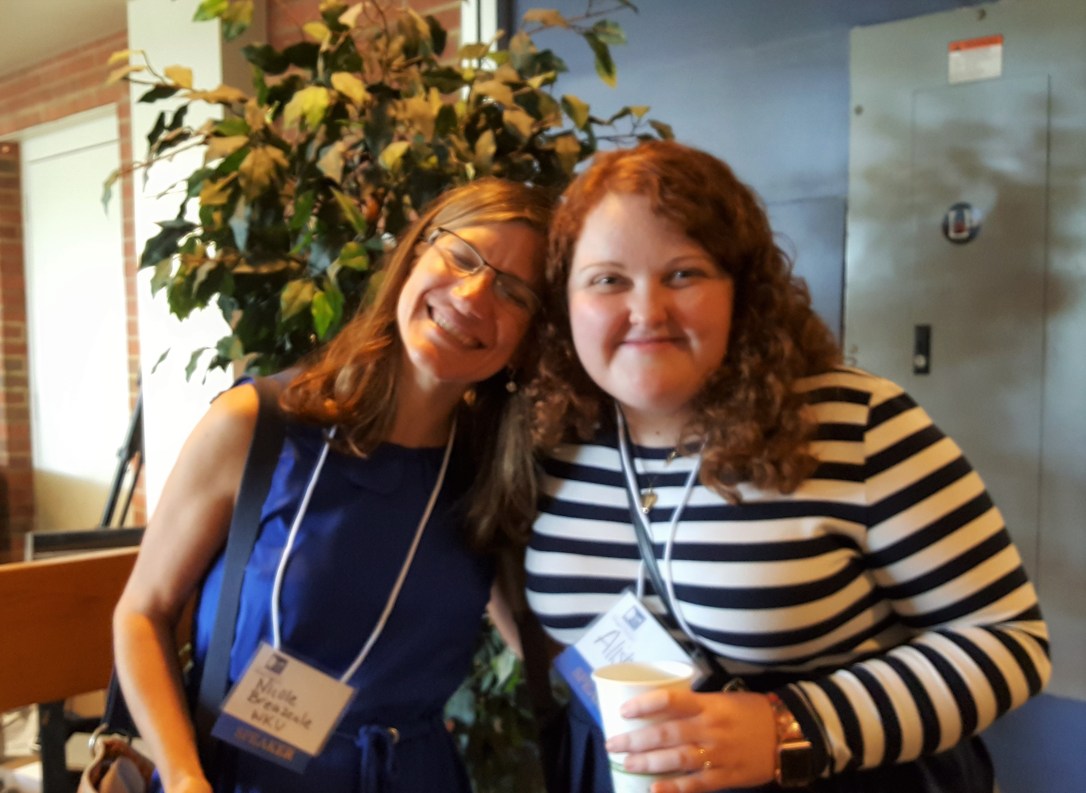
Nicole Breazeale with Alisha Mays (right)

Find other episodes and Breaking Beans stories here:

http://cfaky.org/blog

Download this and other past episodes here:

https://archive.org/details/@breakingbeans

The Breaking Beans Variety Radio Show airs on 88.7 WMMT (online too!) the first Wednesday of every month at 6pm featuring stories, interviews, recipes, and news from the food and farming worlds in the Appalachian region!

Hosted by Breaking Beans Fellow Sister Kathy Curtis.


breakingbeansWEBsm

Breaking Beans: The Appalachian Food Story Project is an initiative of Community Farm Alliance to tell the story of how local food and farming in Eastern Kentucky can contribute to a bright future in the mountains. Eastern Kentucky is at the point where it can foster a food system that is equitable and accessible to all, provides fresh nutritious food, and serves as an economic generator that builds community wealth. With a rich history of food and farming, stories of how Eastern Kentucky is already growing in that direction – and the challenges along the way – are important for informing people and policy alike.

Uncategorized

Food Before It Was A “System”

by Sister Kathy Curtis

Here in eastern Kentucky there have been a lot of conversations using the term “food system”. According to the folks at S.O.A.R. (Shaping Our Appalachian Region), “creating a local foods movement by connecting local producers to markets for their products both within and outside the region” is one way to meet their mission: SOAR’s mission is to expand job creation, enhance regional opportunity, innovation, and identity, improve the quality of life, and support all those working to achieve these goals in Appalachian Kentucky. I am excited that our elected officials see the value in connecting farmers and eaters.

What I have to wonder, though, is what was in place before? I decided to find out.

An aerial view of Red Bird Mission. Image courtesy of Red Bird Mission.

My first step was to contact Justin Brock, the Grow Appalachia Director at Red Bird Mission in Clay County. Since 1921, Red Bird Mission has been providing ministries in and around the isolated and rural areas of Clay and Leslie County Kentucky where chronic poverty, lack of jobs, poor housing, and rugged mountainous terrain present obstacles for residents of the area. Red Bird Mission has been addressing needs through ministry in five areas: Education, Health and Wellness, Community Outreach, Economic Opportunity, and Community Housing Improvement.

Red Bird Mission was one of the first Grow Appalachia sites and Justin has been with Red Bird since 2009 becoming the Grow Appalachia program director in 2014. His family is from Leslie County, a very rural county with a population of 11,019 as of the 2013 census.

When I explained what I was trying to find out, he said, “I know just the folks to talk to.”

I met up with Justin Thanksgiving week at the Mission. He showed me around campus a bit, explaining that at one time a large portion of the campus itself was a farm, providing all the Mission needed in the way of food. Now the campus houses the clinic, housing units for seniors, volunteers, staff, and students of the Red Bird School, so there is little land left for gardens, although Justin has found spots here and there to plant his Grow Appalachia gardens. A fairly recent addition to the campus was a shelter for their farmers’ market and a clean water distribution center.

Sister Kathy (left) talks with Catherine (right)

After touring the campus (and giving our first

stop some time to get ready for visitors) Justin led me to the women’s dorm for the Mission School where his 84-year old memaw, Catherine Brock, is currently residing. Catherine, like most youngsters of her era, got an early start at working in the garden, but it wasn’t until her daddy died when she was nine that the responsibility really set in.

She had three brothers and four sisters. When the two older brothers left home when she was a teenager, she took on their responsibilities too. Her daily chores were building the fire in the cook stove, sometimes cooking the breakfast, milking the cow, and then going to plow. The family had a big field of corn “laid up the hill” and a large vegetable garden and plowing using a mule was Catherine’s job.

“It was ‘bout the only way we had anything to eat,” she said. “I remember one time Mommy got 200 baby chicks and we would eat them as they grew up, three, four, five at a time. There were quite a few of us. We always had chickens. Well I guess I cleaned my last chicken just last year,” she told me with a smile.

I asked her what “laid up the hill” meant. Most of eastern Kentucky is Appalachian mountain country with lots of steep hills and very little flat land, so gardens and corn fields were put on the side of the hill: laid up the hill. I told her I couldn’t imagine planting a small garden on our hillside much less plowing a cornfield and she pointed out there weren’t a lot of other options. She plowed the hill as a child of thirteen and continued while raising her own children.

“I tried to plow a little every year we had a mule just to do it. I could plow about as good as any man,” she said with a grin.

When she married and had her own family of five children, she continued being the person responsible for growing their food. Her husband D.M. started working in Pike County and only came home once every two weeks so Catherine took care of the cows, hogs, and chickens as well as the gardens and corn field. The Brock’s had a big garden “under the hill” (on the hill below the house) where they grew everything they needed.

Red Bird residents and other Eastern Kentucky farmers work the steep hills and narrow bottoms like the one pictured here – buildings are built into the hill, like this barn

The house was built on the side of the hill so they had a cellar where they stored potatoes and such.

“One time we laid up forty bushels of potatoes. He built a box and put them in it. And some were just scattered on the floor. Those were the ones we ate first,” Catherine shared.

They had cows, hogs, and chickens too.

“One time we had this cow and she got loose and went out about two miles and had her calf. Well me and my eldest, he wasn’t too old yet, well I went around there and got that calf on my shoulders and brought it back home. There was no one else to help me,” she said matter-of-factly.

The whole family was involved in gathering food not only at home but in the hills.

“I’d send them kids up into the hills to pick berries, blackberries were my favorite. There was also some apple and pear trees over the hill and I’d give the kids some coffee sacks and they would load them up.” I asked if she ever gathered poke and she told me all the different ways it could be used, her daughter and grandson chiming in too. Apparently the Brock family knows poke.

After her children were grown, Catherine went to work at the Beechfork Elementary School as a cook and was there for twenty-one and a half years. Catherine said, “I still see some of those kids when I go to town and they say, ‘There’s my cook that raised me’.”

“I’ve had a good life,” she said. “I had a good husband. He worked. He was a good fellow all his life. And I’m enjoying myself now sleeping in and visiting with the girls here,” she told me as we were leaving, “And I have time now. I’m learning how to play the guitar.”

On our way to our second interview, Justin told me more about plowing with a mule, “They are pretty smart animals. You do you first row and get to the end of it and make the sound your mule knows means stop and turn around and then the mule just kinda looks at the furrow you just put in out of the corner of his eye and just goes along sweet as can be.”

One thing you need to understand with this whole plowing with a mule thing is the topography of most of eastern Kentucky does not lend itself to large machinery like a tractor very well – especially when the garden site had a forty-five degree slant to it. But a mule can walk on that angle, so it becomes a real lifesaver to the family depending on their garden for a year’s worth of food. I got a good look at that landscape as we headed to our next interview: Justin’s wife’s 84 year old grandmother, Faye Bowling.

Faye’s house is surrounded by vegetable plots, flowers, fruit trees and a small greenhouse full of blueberry bushes. We found her at the kitchen sink cleaning mustard greens and getting them ready to put up.

“I cook mine some before I put them up,” Faye told me, “So you don’t have to cook them much when you want to eat them.” Her life has been one of making food for her family and she has figured out how to not waste time in doing it.

I asked what her earliest memory of working in the garden was.

“When I was big enough to pull weeds,” she replied, “Maybe four or five. We children weeded the onions, lettuce, and mustard. Fed the chickens. Got the stove wood. Everybody worked. You had to be a worker to live back in them days.”

Faye (left) and Sister Kathy (right)

Talking about workers reminded Catherine of her mother: “One day a feller with a flat bed truck pulled up to the house and asked my momma if she wanted to go to Baltimore, Maryland to work building ships for the war. Well, she went to the woman next door and asked her if she would watch me and Ruth, my little sister. Told her she’d send twenty dollars a month. And then she just jumped on the truck and was gone for twenty months. I had two cows to milk, had to haul a water bucket of bean and one of potatoes for supper and then went back to school. Got there in time for geography and history. Had plenty of homework too.”

When she married her husband Dill, they lived surrounded by his family who all farmed although only one uncle grew food to sell that she knew of.

“He used to grow corn then fall beans to sell to the commissary over in Lynch [a coal town in nearby Harlan County]. He used a sled to haul it out,” Faye remembered. It turns out roads in those days were not really reliable for trucks and cars.

“That’s the middle branch (of the Kentucky River) out there and the old road used to cross the river twenty-seven times between here and Hyden (the county seat). And there were no bridges,” she explained. “The big bottoms were for growing food and nobody wanted to give them up for a road.”

In fact it wasn’t until the 40’s that the WPA finally started working on the road.

Faye remembers, “Used to be in the winter that you would hitch up your horse and wagon to go to Hyden and there would be a place about halfway where there were two big ledges where people built fires and spent the night before going on to Hyden.”

I asked how far away Hyden was: “About twelve miles.”

Faye, like Catherine, spoke of “new ground” and how hard it was putting in a new field because you couldn’t use a mule to plow due to the stumps still being in the ground.

Faye described, “You had to dig the corn in. With them trees down, the ground would be full of old leaves and all so you would just plant your corn right in the leaves.” I wished right then I could see a picture of those corn “fields”.

Faye and Dill raised three kids and “about any kind of vegetable and some corn but no stock.” They opened a general store and ran it for about twelve years.

“We had any kind of food, fertilize, hardware, shoes, clothing, everything but gas. We ran the store for about twelve years then I sold it to a lawyer, then he moved on and sold it to my sons,” Faye explained. Her sons still own the store.

Red Bird residents and other Eastern Kentucky farmers work the steep hills and narrow bottoms like the one pictured here

While talking about the store, Faye mentioned they sold seeds, so we started talking about “old time-y” seeds, like mustard and corn seed and tomatoes. She said they always saved their seed mostly because you can’t get those varieties anymore. Like corn. Apparently sweet corn, or what us non-farmers call “corn-on-the-cob,” is a relatively new invention. Everybody planted corn, just regular corn. It was how you cooked it that made the difference.

“You take the top off so you can scrape it all out. Then you take your big cast iron skillet and brown some bacon in it. Then put water in it and the corn and keep stirring it so it doesn’t burn. Then you put a heaping tablespoon of sugar and crumble some bacon meat and stir it all up. Best corn you ever ate.” Faye was laughing as she told me how some friends of hers had made it and it was so good, “they foundered in it!”

Another old time-y food I learned about is apples. Faye’s favorite was a hulling apple called Black Ben Davis because when was fully ripe in the fall its skin was almost black and the flesh snowy white. She said folks would can apple slices to fry for breakfast and use the hulls to make jelly. She would save the hulls and skins for a cold, snowy day and make apple butter.

Faye and I talked more about tater onions, the best corn for hominy, and how moon flower vines and an empty hornet nest on the front porch keeps it cool and bug free all summer. But too soon we had to leave to visit the last relatives on our journey, Farmer and Roberta Brock.

At sixty-seven and sixty-five, respectively, Farmer and Roberta were the youngest people I interviewed for this story. They live on property Farmer has been on since he was seven years old and first met when Farmer’s father married Roberta’s sister. They have been married themselves for fifty years. Farmer worked on strip mines and Roberta worked the garden, cooked, did the wash – “What a wife was supposed to do. When he comes home, have supper cooked,” Roberta remarked. She says she learned everything she knows about cooking from Farmers’ mother.

“She had twelve children to feed so she knew how to cook,” Roberta told me. “And Farmer’s daddy taught me how to work in the garden. We used a horse and plow. We didn’t have a tiller back then so we just hoed it. I like the old timey-y ways like heating with wood and coal and canning. I always canned. It tastes so much better.”

She shared, “We always raised hog meat too. In the wintertime you would dry it out, cure it out. You’d put it in the smoke house and salt it down for about two weeks. You have to turn it over to make sure it was OK then we would hang it up.”

Justin told me that Farmer and Roberta were a part of Red Bird Mission’s Grow Appalachia program and that Farmer was an expert tater grower.

Red Bird residents and other Eastern Kentucky farmers work the steep hills and  narrow bottoms like the one pictured here

When asked his favorite variety he responded, “Kennebec, I grow them and they keep good over the winter.” He also likes the little red Pontiac for spring new potatoes but doesn’t care much for the golden ones. I asked him what he did for the pesky Colorado potato beetle and he said that he uses the spinosad spray he gets from Justin but he pointed out that when he was a kid they didn’t have those beetles and as far as he was concerned they “could send them back to Colorado.”

I asked Roberta to tell me more about the canning she loves and was surprised to learn she has only recently started using a pressure canner and she isn’t all that comfortable with it.

She told me, “Farmer’s momma taught me how to can. You take a number three washtub and take clothes and line it. Then you get your filled jars ready and put in with the clothes and stuff paper between them. Then you put clothes and something on it to keep ‘em so they don’t float. Then build you a fire, don’t fix a real big fire. I cook ‘em about four hours. I’ve done that for years.”

When I asked her why she didn’t like a pressure canner, Farmer said, “She’s a little scared of them.” Ends up that she was canning one day with a pressure canner and she heard a funny noise and the top blew off. The good news was she was using it outside so it didn’t make a big mess in the house.

“Never could get that gasket back on,” she told me. “Extension gave me a new one, though, so it works now.”

Before we left, Roberta showed us her pantry: shelves filled with home-canned vegetables. Roberta proudly gave me a quart of her sauerkraut and her recipe on how she makes it. She and Farmer walked us to the van and invited me back anytime. This, I thought to myself, is mountain hospitality.

Roberta’s canned goods

Driving back home I thought about the people who had invited me into their homes and talked about their lives, sharing themselves as well as the bounty of their gardens. I recognized in these “old-timers” what people across Appalachia are doing today in developing local food systems. They are using the skills and values of the past and doing the hard work of growing not only food, but communities.

Before I left Catherine’s house at the beginning of the day I had asked her if she thought today’s generation could do the work she did to feed her family.

“No,” she said with a smile, “They don’t have to.” Faye had reminded me that they took care of the land so the land could take care of them. Farmer keeps his grandboy from Louisville every summer because his daughter wants her children to know how to grow a garden and he has the wisdom that was passed down to him.

Before it was called a “local food system,” there were people who grew food so they could eat. I wonder if it might be wise to invite them to the conversations about local foods? Or better yet, sit around a fire with them and share a meal and some stories.


Breaking Beans: Appalachian Food Story Project is an initiative of Community Farm Alliance to tell the story of how local food and farming in Eastern Kentucky can contribute to a bright future in the mountains. Read the stories at cfaky.org/blog

Uncategorized

Breaking Beans Radio #8: Breaking Beans and the Bowlings

Aired: September 7, 2016


Breaking Beans show host Sister Kathy speaks with Community Farm Alliance Development and Communications Associate, Mae Humiston, about the Breaking Beans project, and with former Breaking Beans Fellow, Maggie Bowling, and her husband Will about their farm business, Old Homeplace Farm, in Clay County.


Find other episodes and Breaking Beans stories here:

http://cfaky.org/blog

Download this and other past episodes here:

https://archive.org/details/@breakingbeans

The Breaking Beans Variety Radio Show airs on 88.7 WMMT (online too!) the first Wednesday of every month at 6pm featuring stories, interviews, recipes, and news from the food and farming worlds in the Appalachian region!

Hosted by Breaking Beans Fellow Sister Kathy Curtis.


breakingbeansWEBsm


Breaking Beans: The Appalachian Food Story Project is an initiative of Community Farm Alliance to tell the story of how local food and farming in Eastern Kentucky can contribute to a bright future in the mountains. Eastern Kentucky is at the point where it can foster a food system that is equitable and accessible to all, provides fresh nutritious food, and serves as an economic generator that builds community wealth. With a rich history of food and farming, stories of how Eastern Kentucky is already growing in that direction – and the challenges along the way – are important for informing people and policy alike.