Uncategorized

The Unlikely Urban Farmers of East Kentucky

By Ly Madden, Perry County Community Ambassador 


“That’s what God created on the eighth day, was a garden.”

Pictured are Ron, left, and Garnet, right, eating a plate of garden-grown veggies on their porch.

My old neighbor, Ron Weddington, is clearly goading his mother, Garnet, with that line. She’s on the porch with us, so he only gets away with his joke long enough to elaborate on that first line: On the 8th day God created gardeners to take care of all his bounty here on Earth. He can’t catch it sitting next to her, but she gives him the long eye that time, before she cuts in:

“Now where’d you get that? In the scriptures?”

“Well I just made it up Mom!”

“You don’t do that!”

He should know better, too. Earlier that night, when Garnet described the routine her family of eleven siblings and their parents followed on a seven-acre farm in Floyd County she was raised on, the only break from the daylight-to-dark shifts were their Sundays. “We never had to work on a Sunday, never. That was our day,” she says.
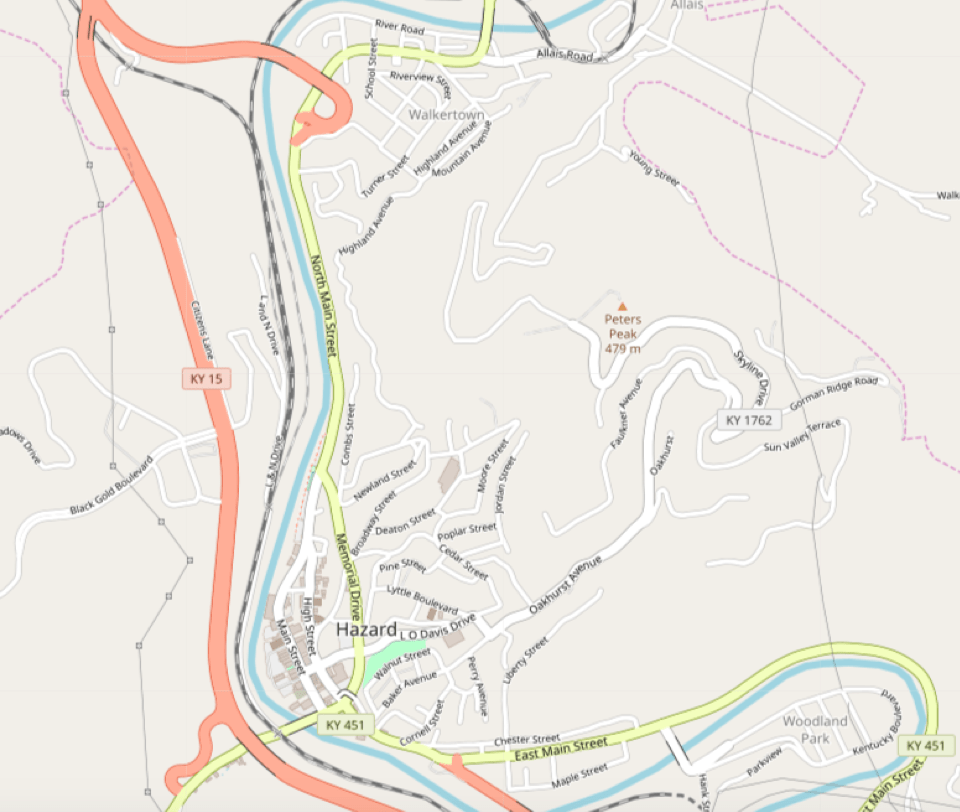
 

Pictured are four neighborhoods of Hazard: Woodland Park; downtown Hazard between the North Fork of the Kentucky River and Memorial Drive; the Backwoods to the East of Memorial Drive; and Walkertown to the North.

The seven-acre farm’s gone, but the Weddingtons have held onto to a two-plot garden in the heart of Hazard. Ron and his wife, Tammy, live with their son in the house next door to Garnet’s in Walkertown, the next neighborhood upriver from downtown Hazard. Tammy grew up in Rowdy, close to the Breathitt and Knott county lines and relatively far into Perry County, while Ron and Garnet have lived in Walkertown nearly their entire lives. Their homes share a yard, threaded through with a laundry line, and bookended by the strip of Main Street running through the heart of Walkertown on one side, and the Kentucky River on the other. Late at night in July, the insects are loud enough to crowd out the sound of cars exiting and entering Highway 15 a few blocks south.

5,000 or-so folks lived in Hazard at last count, a small town to most, with 5,000 or-so people that will tell you they live in a neighborhood within a city. Names for each neighborhood are popularly interpreted in a few of their origins – the Backwoods traces its name to platting books drawn around the time of campfire revivals, while Jenny Williams has told me a diary written in the same period gives a few blocks of that neighborhood a separate name, worth considering for historical accuracy in our local naming system. Walkertown and a handful of other neighborhoods kept the names they held before their incorporation into Hazard City limits. Along the Kentucky River, the City boundary crept outward first to Walkertown, and runs the length of two to three hours in boat-on the-water time to Airport Gardens, the last neighborhood before one leaves town.

The chain of distinct neighborhoods always gave Hazard the feel of a bigger city, where Walkertown sits neatly between tight-knit and-quiet and a close walk to downtown. Yards lean on the city side, smaller and close together, and while the weather is pleasant enough for folks to manage herbs and tomato plants in the backyard, within city limits one can be hard pressed to see the land for farming.

Still, Ron’s father, Bert, began a garden on the banks of the Kentucky River in the 1970s. It’s a garden Ron and Tammy still maintain, and a project Garnet’s always shepherded along. “I do everything that mom taught me to do,” Ron told me. “And the seed that we’re using, our green bean seed, that came from my great-grandmother, that I still raise today.”
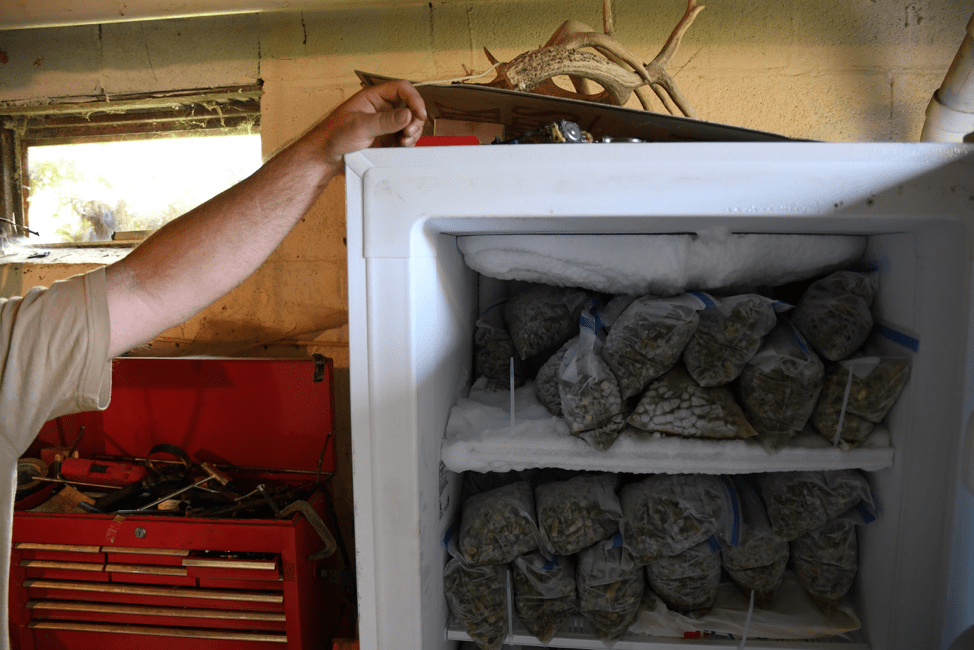
Pictured are a few shelves of this year’s yield of green beans, the same passed down from Ron’s great-grandmother.

In Perry County, gardening’s popularity has waned within Hazard over Ron and Tammy’s lives. Out in Rowdy, where there’s wider parcels of land to live on and grocery stores are further away, Tammy’s grandmother raised a garden that could feed her entire family that she and her siblings helped tend, a practice that remained common outside of county seats.

“And I hated it!” Tammy says, ending with a laugh. “But now we do it a little bit different, and it’s a lot easier. I enjoy it today. And it’s not so – like, it was taboo when we were growing up. Only the poor kids had to work in their gardens, and make sure they had a big garden, cause they couldn’t afford to go to the grocery store and buy their food. So [growing up] we hated it, but I really, looking back I appreciate it, and I could always go to my grandmother’s, and she would always have food, always. And it was good food.”

Despite the decline in home gardening within county seats, Garnet, Tammy, and Ron have maintained the Walkertown garden behind Garnet’s home. So far this year, their yield’s held up, with their garden growing beans, corn, cabbage, onions, cucumbers, tomatoes, potatoes, and kale. At this point, they’re waiting on a second crop of corn, sweet potatoes, and watermelon. In the truck shelter next to Garnet’s house, bunches of onions are tied to the beams, along the porch, the railing is lined with tomatoes. From everything I see and hear, it looks like a good year for the garden; still, Ron insists on changes for next year.
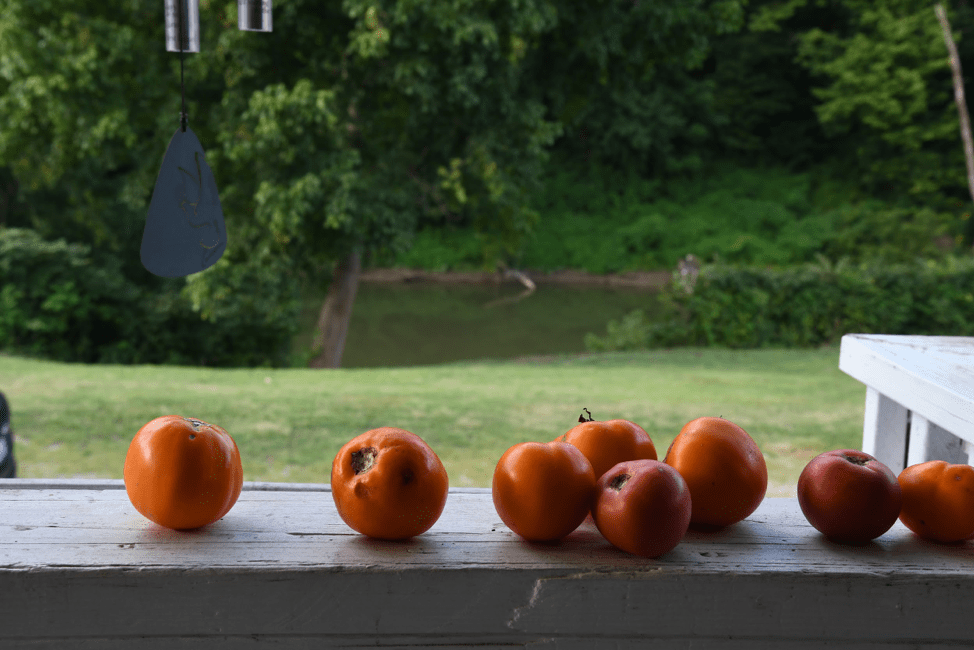
Pictured: A handful of the tomatoes from the garden, with the North Fork of the Kentucky River in the background.

“I planted too many watermelons in one hill. I knew not to plant too many, but I said, well I’m not gonna make a lot of hills, so I’ll just plant a lot of seeds in each hill. When you do that you get more bud than you do watermelon – so all my watermelons are just blooming, that’s all their doing. They’re not producing a whole lot of watermelons.” Garnet jumps in on that.

“You’re ‘sposed to pinch that runner off.”
“I know you are Mom, but you’re not supposed to plant 20 seeds in a hill too.”

It’s those exchanges between Ron and Garnet that bring to light how the Weddingtons have kept a garden big enough to feed themselves, their family, and their neighbors for close to 50 years while Hazard changed around them. Throughout our conversation, Tammy leans over to me, and points to Garnet: “the garden wouldn’t be what it is without her.”

And eating those beans Ron’s still growing from Garnet’s mother is enough to turn you off any other such plant. The Weddingtons don’t want to restrict their garden to family and friends only, either. I’ve asked Ron a few other times to sell the surplus produce they grow at the Perry County Farmers Market. He refuses to sell the food they grow, but would like to teach our neighbors in Walkertown to garden and find ways to distribute surplus for free to the community. In spite of their own family’s energy though, he’s fearful of where gardens will go from here.

“It’s hard to get people interested in gardening. It’s hot – the summer’s are getting hotter, the climate’s changing. But, people are gonna have to get back into gardening if they want healthy food, here in East Kentucky. Because you can’t go to Whole Foods. What you get at Food City, and Save-A-Lots, that’s all we have for grocery stores. There’s just not a whole lot to choose from, and if you want to buy organic, you’re gonna have to pay for it.”

The Weddingtons have all seen and cultivated real excitement in the folks they surround themselves with around home gardening, despite their own concerns. Tammy tells me Ron and her taught her sister to garden. That knowledge passes along too – her sister took the lessons Tammy and Ron gave her to help her father-in-law with his garden.

“He’s on dialysis, but he loved it, and he’s just got a small garden, but she went down and helped him with that, and that helped him. Got him out of the house, feeling better, just by doing that.”

When I leave Walkertown, Ron cuts a bunch of onions they’ve put away in their garage for me, and fills two grocery bags with tomatoes to send along as well. The hopes they hold to start a neighborhood food share day, to give out vegetables and fruits from their garden for free along with other gardeners, and teach their neighbors growing techniques all come from the same spirit that’s never let me leave the porch without at least walking down to pick out cucumbers. Earlier when I asked Tammy how growing food out in Perry County has been different from the garden she’s helping to raise now, she told me this:

“In the city you’re worried about your house looking pretty, your yard being perfect – out in the county, you’ve got a lot more land, your backyard, and so, you’ve got more room to work with, you’re not so much worried about prettiness as you are with food.”

For the Weddingtons though, I think the garden might make the house.
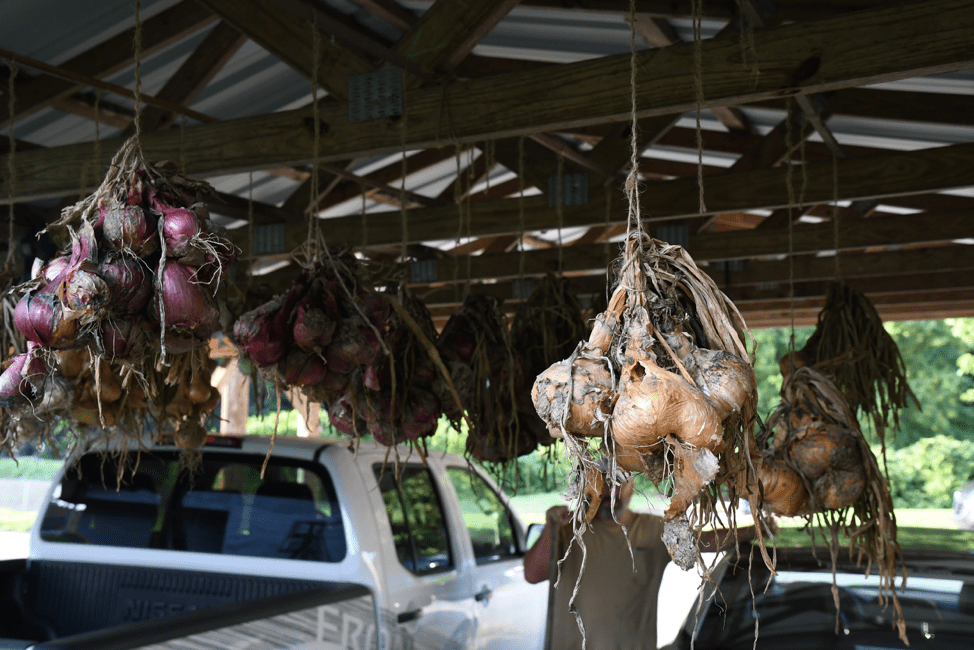
Pictured: The red, sweet, and yellow onions grown in the Weddingtons’ garden, strung up in their carport.

For support on starting your own garden, please reach out to our friends at Grow Appalachia. They have several sites across the region that support folks in growing their own food, the closest to Perry County being the Hindman Settlement School site, run by Olivia Harp. To learn more about Grow Appalachia please visit their website here.


Uncategorized

Farmers’ Markets Don’t Just Happen

by Sister Kathy Curtis

I love farmers’ markets. I love the fresh produce and the carnival atmosphere. I love supporting the local economy and meeting and networking with the people I meet at the market. Unfortunately, here in eastern Kentucky, fresh locally grown produce won’t be available for several months yet. But I was able to get some networking and storytelling in recently with my farmers’ market friends when the leadership of three eastern Kentucky farmers’ markets held their first vendor training sessions. Farmers know that if you want to have tomatoes to sell in June, you better seed them in February. And farmers’ markets that want to be successful need to start planning way before opening day too. That’s why, on a slightly sunny Saturday morning in late January, the Perry County Farmers’ Market held their Winter Farmers’ Market Meeting.

The Perry County Farmers’ Market is supervised by the non-profit Northfork Local Foods through the work of Market Manager Emily Whitaker, Board Chair Jennifer Weeber and CFA Farm to Table Associate, Carolyn Davis, each of whom took a workshop focus.

Carolyn started us off with introductions and dreaming. As we went around the room introducing ourselves and where we were from, I knew I was in for a treat. There were farmers there from at least five different counties: Perry, Knott, Letcher, Breathitt and Pulaski. Most of the farmers present have been long time vendors with the Perry County market which has been active for around twenty years in some form or another. So, when Carolyn asked what we thought an “ideal market” would look like, what we liked most about the Perry County market and what we thought would make it even better it didn’t take long to compile a great list

Next, Jennifer led a market business session on fees, location, dates, certifications, that sort of thing. Two issues that have come up frequently over the last couple of years in Perry County are resale, the selling of products not grown by the seller themselves, and smoking at the park shelters where the market is held. As you can imagine, the discussions were lively but, it is exactly these opportunities to bring potential issues to the entire group that make for successful operations.

Emily led the last session, a discussion on who was growing what for the 2018 market season. After writing down everything called out, the group looked for what was not on the list yet and should be. “Mushrooms” someone said to a mummer of agreement and they got added to the list. The session ended with a very long list and several commitments to have spring greens, seeds, veggie starts, crafts and honey available for a May opening date.

After a lovely lunch of fresh, salad greens, soup and bread, the rest of the afternoon was given over to Charles May, agriculture agent for the UK Extension Service, who was leading the Produce Better Practices Training (PBPT) lovingly referred to locally as “the new GAP.”

More and more farmers’ markets are requiring that their vendors become certified in PBPT to assure that the produce that is being sold to customers is healthy and safe. The training teaches farmers and gardeners how to grow, harvest and wash produce to avoid contamination from soil borne pathogens. The training teaches the safe ways to apply fertilizers, chemical and natural, the safe way to clean produce for transport and sale, as well as how to keep washing and packing areas clean. Also, PBPT is required for anyone doing home based processing of any type as well as sampling at markets.

Since I was scheduled to take my PBPT and All Samples training in Pikeville the following weekend, I grabbed another home baked cookie and some locally roasted Windy Hills coffee and headed out to enjoy the rest of the sunny January day.

Bright and early the next Saturday morning, I headed south to the Pike County Extension Office for  another day of learning and relationship building with the Pikeville Farmers Market team. While still a fairly young market, the Pikeville vendors are not afraid to do new and innovative things to grow their businesses. They might have fun with each other cutting up in their new pavilion right off Hwy 23 but, when it comes to why they are there it is to sell a quality product at a reasonable price to their friends and neighbors.

Most of the business of this market is done by an elected board so, this meeting was strictly for training. Jackie Cole, Environmental Director from the Pike County Health Department started off the day talking about the requirements the health department has for selling ready to eat food at the market. The Pikeville Farmers’ Market has several vendors who sell hot meals, everything from BBQ, to Thai, to Cajun-style so this information, which isn’t usually on the roster for an eastern Kentucky farmers’ market, is necessary in Pikeville.

Ready to eat meal vendors are permitted through the health department of each county. Typically, a food vendor who sets up at a carnival or festival can only get a permit for a few days and cannot be issued for that location again for six months. However, in Kentucky, a food vendor who sets up regularly at a farmers’ market can get a permit to sell for two days a week for eight consecutive months. The vendor must pass the food handlers exam with a fee of $25 and then pay $100 for the extended farmers market permit. It is a relatively low charge with potentially high returns for both the vendor and the market.

Yours truly got an opportunity to talk about Community Farm Alliance and how we support and advocate for family farmers across the state in Frankfort and provide assistance programs especially to markets like theirs through the Farmers’ Market Support Program. I invited them all to the Eastern Kentucky Farmer Conference which was being held the end of February and then passed the microphone to agriculture agent Suzanne Stumbo for the main event, the Produce Best Practices Training (PBPT).

Soon we were engrossed in the PBPT lesson. Actually, I’m not joking. Maybe because I am not a farmer, but I hadn’t really thought about the science and health management that goes into growing food. Things like water sources, fencing and even the clothes a farmer wears into the field can have an effect on the final product. Let me just say, we don’t value our farmers enough for all they go through so we can eat safe, healthy food.

The actual class took under two hours. For those of us who wanted the sampling certificate there was a test which would be graded. I found out earlier this week that if I missed any of the questions the Kentucky Department of Agriculture (KDA) would contact me to make sure I know the material before they will send out my certificate. Hopefully I will pass with flying colors. If not, I will take it again. Which reminds me, if you have already gotten your PBPT but didn’t do the sampling test and now you think it might be a good thing to have, you can go to KDA’s website, download it, take the test and mail it back in. It’s that simple.

After a lunch of homemade chili and fudge, Melissa Bond from CEDIK gave a session on creating displays and marketing pointers for a table set up guaranteed to increase your sales. Since I was not a vendor, I grabbed another piece of fudge and left. Are you starting to see a pattern here?

A week later, I headed to Letcher County for my third and final market training session, interestingly called: “Love 2 Farm Day”. If you think after two weeks, there would be nothing new to learn, you would be wrong. These three market trainings were as different as the markets they call home.

The successful, nationally known City of Whitesburg/Letcher County Farmers’ Market began as a project of the Grow Appalachia program at Cowan Creek Community Center. Before becoming CFA’s Healthy Communities Initiative Director, Valerie Horn ran the Grow Appalachia program at Cowan. She will tell you that Grow Appalachia’s suggestion that families grow “a little extra to sell” became the impetus for starting a farmers’ market in nearby Whitesburg. So it was no surprise that the Love 2 Farm event was a mix of those two programs. And with Valerie’s style of teaching through interaction, it was full of food, fun and a little bit of paperwork.

When I got there the pancakes and bacon were just being served (timing is everything) so, I grabbed some bacon and some coffee and found a seat. I’m not a big fan of maple syrup so I passed on the pancakes but later had to eat my words (with a little bit of maple syrup on them) when I took a small taste and found the syrup had a most delightful woodsy flavor. Try some SouthDown Farm maple syrup and find out what I mean. 


While we ate, Valerie told us what was happening in Whitesburg. Ends up there’s a lot. She talked about the UK walking program and the Farmacy program both of which add direct income into the pockets of farmers in and around Letcher County. She told us about the commercial kitchen in the old high school and that when it opened it would be providing ready to eat meals using produce purchased directly from Letcher County farmers. And then she started introducing her guest speakers.

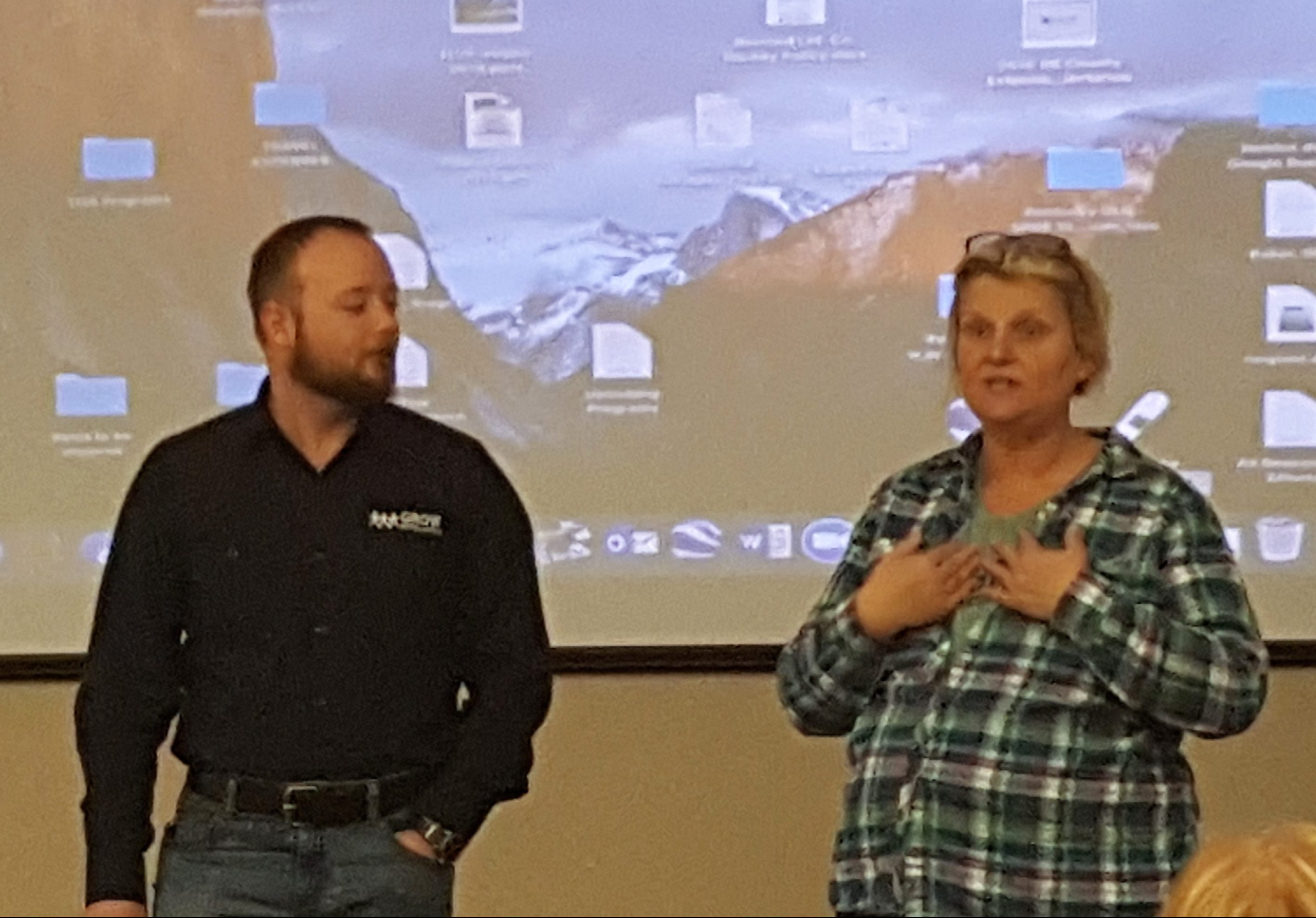
First up was Chris McKenzie from Grow Appalachia who talked about the new EKY DIGS program. DIGS (Direct Integrated Grower Support) is designed to bring one on one support to the small scale farmer in Eastern Kentucky.   The program includes soil testing, on-farm consulting, an individualized production and more.

Then came David Tyler who owns the Plant Place, a seasonal greenhouse where he grows vegetables, bedding plants,hanging baskets, “and much more!” All of his vegetable plants are seeded in house and his flyer says to ask him about his Turkey Creek tomato. David shared what he had available and ready to go in the ground and the different varieties his customers have requested for this year. It was a real pleasure to meet David and know that his small business was being so well supported by the community. If you are in Letcher County this spring stop by the greenhouse on HWY 3401 beside the Mountain Vendors Mall. Don’t worry if he’s open. Just pull up out front and he will see you “and come right out.” He lives next door.

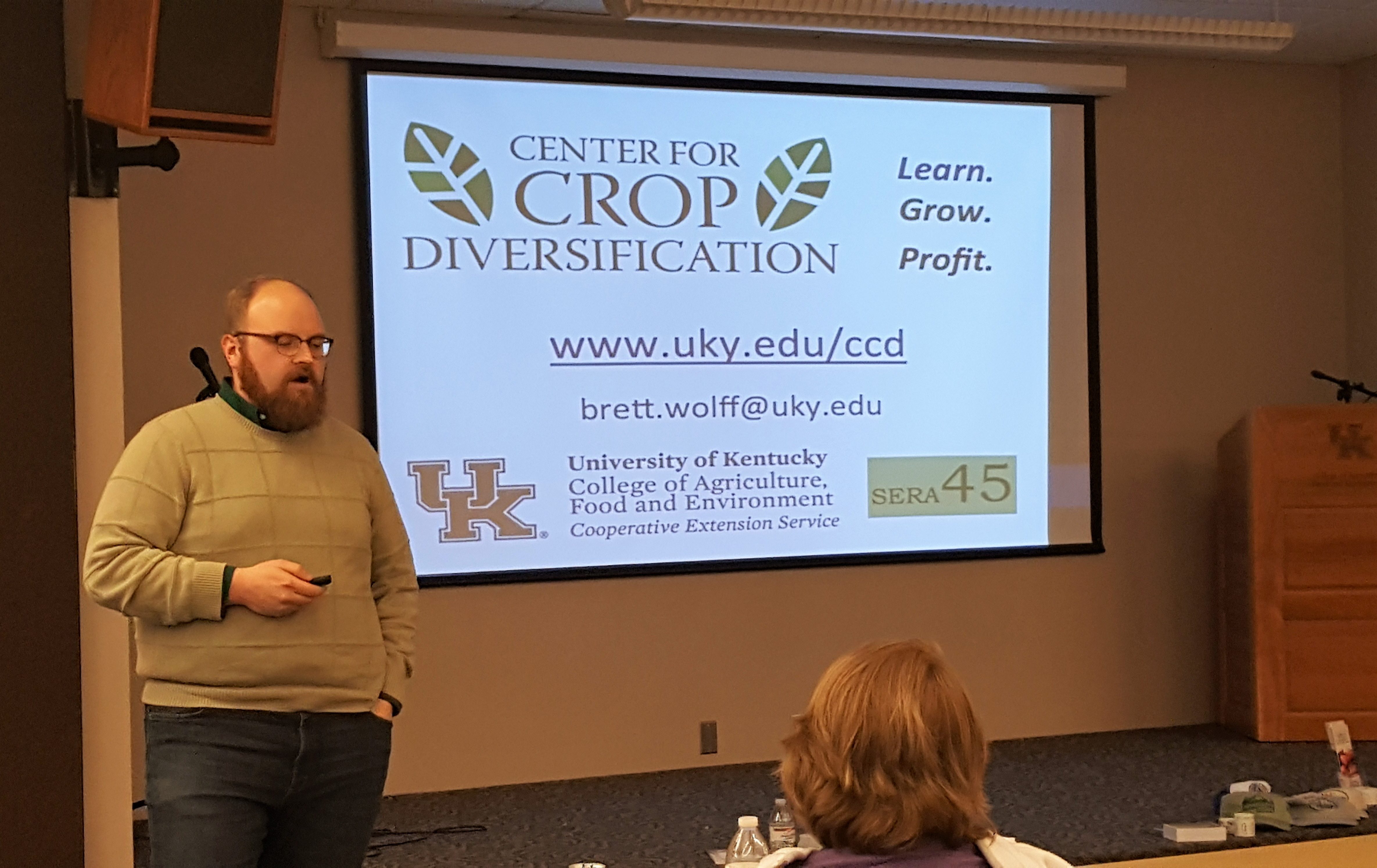
The pre-lunch presentations wrapped up with Brett Wolff from UK’s Center for Crop Diversification. He told us about what the Center does to help farmers set their prices and plan what they are going to grow. His office has several years of data about the availability and market price of most fruits and vegetables typically offered at Kentucky farmers’ markets. He has graphs that can tell you the high and low prices of tomatoes the last couple of years, when there were no beans at local farmers’ markets and when there was a glut and we even found out that it is Brett’s office that lists the suggested going rate on produce for farmers’ markets in Eastern Kentucky on their website every week.

While standing in line for a lunch of soup, cheese, bread and cake, I figured out that an Eastern Kentucky farmer could have Chris come out to see what crops would do best on their farm, check in with Brett on when and how much to grow and then go to David to pick up the vegetable starts.

After lunch, we separated into four groups for the last activity of the day: planning market events. Most successful farmers’ markets have more than good food. They invite the community to come and play too. The City of Whitesburg/Letcher County Farmers’ Market offers the summer feeding program for kids which is very popular. They also have lots of fun theme days which need to be planned in advance. To get a jump on that planning, Valerie added it right into her training sessions.

Each group was given a page from a large calendar and told to plan special events for the months the market was open. My group got August, so we googled August holidays for some different ideas. We came up with International Underwear day—collecting new underwear for the school resource centers; Bad Poetry Day—with a “content appropriate” poetry slam at the market; and National Storybook Day where the vendors will dress as their favorite story book character. Needless to say, I will be sure to be in Whitesburg at least a couple days in August.

I ended up breaking my pattern in Whitesburg by staying to the very end of the training (although I did get another piece of cake.) And as I headed home, thinking about these three planning/training opportunities for our eastern Kentucky farmers and farmers’ markets, I was excited about the diversity and uniqueness that each community celebrated in their markets. There is no such thing as one size fits all in Appalachia. From the multi-county vendor base in Perry County to Pikeville’s metropolitan atmosphere to fun and games on a Saturday in Whitesburg, each Eastern Kentucky farmers market has its own personality.

As we work to build healthy and thriving communities in central Appalachia, I can’t help but think that small family farms and the farmers’ markets where they sell that are popping up like mushrooms on hillsides in spring are a real opportunity toward wholeness. Our farmers are dedicated to growing real food for us, our children and our grandchildren. We need to be dedicated to supporting their work. This market season, support your local farmers’ market and be glad to pay full price if you can. Farming is not a job. It is a vocation and we should honor those folks who grow our food with our praise, our thanks and our money.

For more information on Grow Appalachia and UK’s Center for Crop Diversification, please visit their websites. You can find all of these farmers markets and David Tyler’s Plant Place on Facebook here.

Uncategorized

From Market Vendor to Entrepreneur

Written by Sister Kathy Curtis, Edited by Maggie Smith

My first experience with a farmers’ market was in 2011 in Floyd County, Kentucky where I volunteered to help the farmers get set up, run errands, and put out about a million signs. I decided I wanted to help them because I am interested in anything that can bring income into our region and who doesn’t like fresh food. In my six years working with the market vendors I came to realize that farmers’ markets are not just a place to buy fresh food straight from the farmer but also an incubator for small businesses.

Over the years, I have had the privilege to make friends with several women who started out at a farmers’ market and have expanded their business beyond summer afternoons.

Before I tell you their stories, I wanted to share that Community Farm Alliance was a driving force behind the passing of Kentucky House Bill 391 (which was signed into law November 1, 2003) It opened a lot of doors for farmers like Benette who grow a product and then “add value” to it by canning, preserving or baking it into something that can be sold for a higher price. Limits for home processors, like Benette, is that their products can only be sold at farmers’ markets, certified Farm Bureau roadside stands or from the farmer’s home. Commercial licenses don’t have those limitations. And two local women have used their local farmers market as an entry into retail sales with their commercially processed products.

Here are their stories, and the on the ground results of how CFA has supported the farmer:

Benette Howard is definitely a farmer. She and her husband own one farm in Johnson County and she inherited two others. For her, farming was a way of life, raising everything, even beef, pork, and chickens. “You didn’t go to the store every time you wanted something. If you didn’t have it, you did without” said Bennette. She also told me working in the garden was instilled in her as a kid. She remembered when she first started helping her uncle, he set her to pulling weeds in the onions. “I guess they were easy to tell from the weeds.”

Benette first set up at the Floyd County Farmers’ Market towards the end of 2012 market season bringing pumpkins, gourds and colored corn. She did well enough to plan on setting up the entire 2013 season. However, the cool wet spring of 2013 put her behind and that’s when she heard about home based processing. Home based processors may produce and sell low risk products such as fruit jams, jellies and syrups, fruit butters, baked goods, prepackaged mixed greens or herbs, and dried fruits, vegetables, nuts or herbs. She started making Bea’s Jams & Jellies and they went over so well she added baked goods. “When I wouldn’t sell all my fresh stuff, I brought it home and canned it to resell at market” this was Benette’s strategy.

Benette now sells her canned goods during season at both the Floyd County and Pikeville farmers markets. And once the markets close down she still has “a lot of people that call wanting canned stuff and baked goods”.

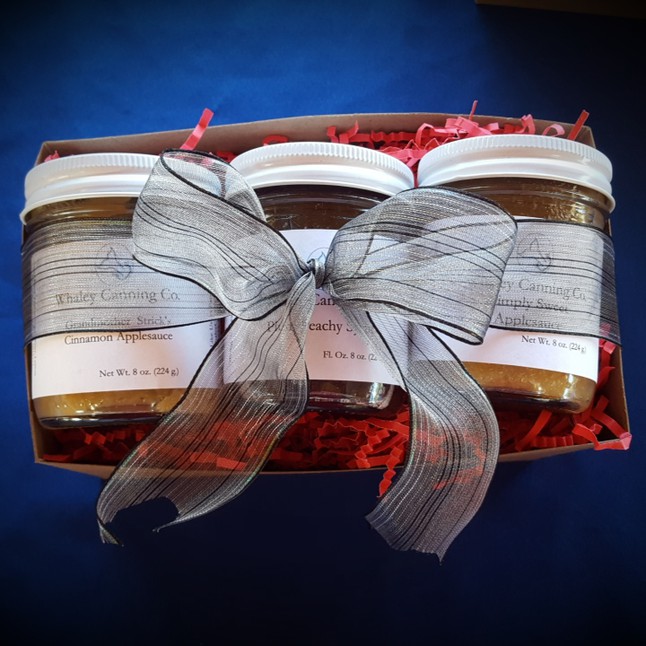
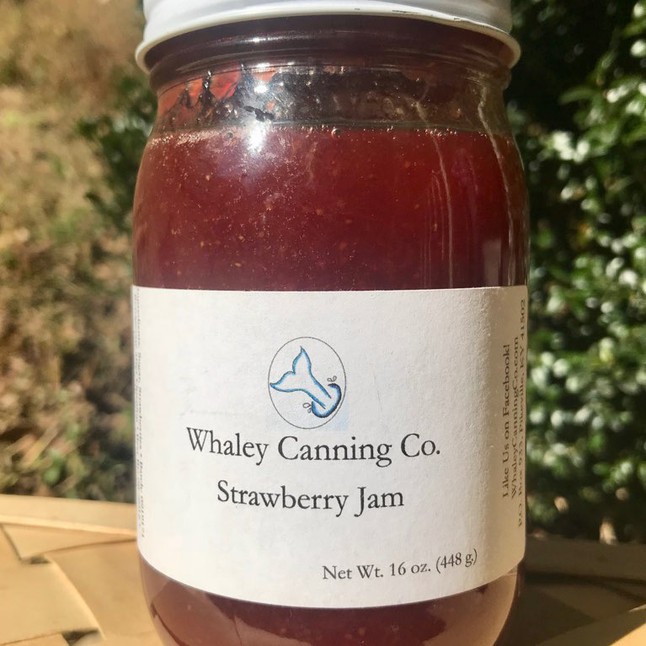
What goes better with baked goods than jams, jellies, and syrups? The Pikeville Market has helped other young entrepreneurs become thriving businesses.  Such as Whitney Whaley, of Whaley Canning Co., started her business just this year after a whirlwind tour of classes and certifications. Whitney was looking for a cottage industry she could do soon after moving to Pikeville and hit upon canning and selling fruit sauces and syrups using old family recipes, like Grandma Strick’s Apple Sauce.

After attending UK’s Food Innovation Center’s Better Process Control School, offered this past spring at the Eastern Kentucky Farmer Conference, Whitney was able to commercially process her products using the commercial kitchen at the Floyd County Extension Office. She met up with Joyce Pinson of the Pikeville Farmers Market who convinced her to sell her products at the market. Business was so good that now, less than one year from starting, Whitney has her products in several local retail stores as well as on her own online store.

A little closer to I-75, in Hazard, you will find Emily Whitaker who like most of us, loves coffee. She loves it so much that when offered a coffee roaster with all the trimmings, she remodeled half of her basement to install a manufacturing kitchen so she could sell locally roasted coffee. Windy Hills Coffee, roasted in Viper, Kentucky made its debut at events in and around Hazard including creating a special blend for an event in Hazard called A Seat at The Table-India where community members can come together and share a meal from a different culture. The reception was so good that Windy Hills coffee can now be found in retail outlets in Hazard and soon to be found in Prestonsburg and Whitesburg too. As market manager for the Perry County Farmers’ Market, Emily’s connection with farmers opened another avenue when farmer friends started adding Windy Hills coffee as a specialty item to their CSA shares.

As noted earlier, farmers’ markets have been entry level opportunities for farmers to sell their products. Most market vendors expand their businesses, like Benette, by having customers come to the farm or like Whitney and Emily through retail markets. But, a few vendors make the scary leap to brick and mortar establishments.

Kristin Smith raises heritage beef and pastured pork in Whitley County on Falkner Bent Farm. She started selling her premium meat products at the Whitley County Farmers Market but sales were slow. “I couldn’t drop my prices so I decided to make tacos so people could taste the difference in my product and buy it. Pork belly tacos. Brisket tacos. Whatever cut wasn’t moving. And it worked. I sold out every week”, she told me in an interview earlier this year.

The Whitley County market vendors became a really tight group and it wasn’t long before they decided they had all they needed, bread, produce and meat, to open a brick and mortar restaurant. And soon the popular Wrigley Taproom and Eatery, a farm to table restaurant in Corbin, Kentucky, was established.


The newest entrepreneurs to using a farmers’ markets as a springboard into business are Lisa and Amy Bourque of Acres of Grace Farm and Bakery in Clay County. Lisa and Amy have been farming on Acres of Grace for about eight years. They believe in being as self-sustaining as possible, so gardening was an easy choice for them

They started selling at the Clay County Community Market about four years ago but what’s interesting is that they did not start by selling produce but instead entered the market to sell Lisa’s artwork, “with a small tray of baked apple hand pies” Lisa told me. Once she saw how much the community loved homegrown and homemade food, she decided to pursue her passion for baking.

The Acres of Grace Bakery, located on Big Creek in Clay County opened this past November. When asked why open a restaurant in such a rural area? Lisa replied “because we really wanted to be a part of the community on a larger scale than what we could produce for farmers’ market. People were asking for our food during the market off season as well so we felt like it was time to take the plunge and fulfill my dreams of opening a small place and do some farm to table for our small area.”

Like Kristin Smith at the Wrigley Taproom and Eatery, the Bourques’ use as much locally sourced food as possible in their meals. When asked why they would open a restaurant on a two-lane road in the middle of one of the poorest counties in the United States, Lisa replied, “Feeding people makes us happy and working side by side makes us even happier. Providing a healthier alternative to our small community is a bonus.”

“Putting your money, where your zip code is” has really been a game changer for folks interested in doing farm to table. Most of the farmers that I worked with at the Floyd County Farmers’ Market, six years ago, grew produce, brought it to the market to sell and went home to get ready for their off-farm job because there wasn’t enough interest in purchasing locally grown food, to make a living.

But farmers’ markets have increased in number and size in the last several years across the Commonwealth. And thanks to the agriculture departments at the University of Kentucky and Kentucky State University, their extension agents, the Kentucky Department of Agriculture’s Kentucky Proud program, and the Farmers Market Support Program of Community Farm Alliance, more and more vendors are becoming entrepreneurs.

Are you a vendor at a Kentucky farmers market? Are you interested in growing your market and your business? Why not check out the Farmers Market Support Program page on our website. Or look into attending the 2018 Eastern Kentucky Farmer Conference February 23rd and 24th. We are Community Farm Alliance where Farm is Foundation.


Uncategorized

Breaking Beans Radio Show #20: Guy Talk

Aired: September 6, 2017

In this episode Sister Kathy Curtis visits the Perry County KY Farmers’ Market to talk with Brandon Stidham, Perry County High School Senior and Local Farmer. The she headed over to London, to chat with Wayne Riley, the Executive Director of the Laurel County African American Heritage Center Inc., about their urban farm and community commercial kitchen. And last, but not least, this episode features Jason Brashear, Hindman Settlement School’s new Foodways Director.


Brandon Stidham, High School Senior, Perry County Farmers’ Market Vendor

Wayne Riley, Executive Director of the Laurel County African American Heritage Center Inc.

Jason Brashear, Director of Foodways, Hindman Settlement School

Find other episodes and Breaking Beans stories here:

http://cfaky.org/blog

Download this and other past episodes here:

https://archive.org/details/@breakingbeans

The Breaking Beans Variety Radio Show airs on 88.7 WMMT (online too!) the first Wednesday of every month at 6pm featuring stories, interviews, recipes, and news from the food and farming worlds in the Appalachian region!

Hosted by Breaking Beans Fellow Sister Kathy Curtis.


breakingbeansWEBsm


Breaking Beans: The Appalachian Food Story Project is an initiative of Community Farm Alliance to tell the story of how local food and farming in Eastern Kentucky can contribute to a bright future in the mountains. Eastern Kentucky is at the point where it can foster a food system that is equitable and accessible to all, provides fresh nutritious food, and serves as an economic generator that builds community wealth. With a rich history of food and farming, stories of how Eastern Kentucky is already growing in that direction – and the challenges along the way – are important for informing people and policy alike.

Uncategorized

Breaking Beans Radio Show #19: Holliday Farms, Appalachian Meats, and the Extension Service

Aired: August 2, 2017

On this episode of Breaking Beans Radio Show you will hear from Peggy Conway of Holliday Farms which is a Perry County family farm with an educational slant. She is accompanied by Jon Reinford of Appalachian Meats in Floyd County who shares his thoughts on locally sourced meat products. Lastly, y’all will hear from Knott County’s UK Agriculture and Natural Resources agent, Chad Conway, who talks about cattle production on reclaimed mine sites.

Holliday Farms, Chad Conway teaches students at one of many events hosted at their family farm. 


John Reinford, Appalachian Meats

Find other episodes and Breaking Beans stories here:

http://cfaky.org/blog

Download this and other past episodes here:

https://archive.org/details/@breakingbeans

The Breaking Beans Variety Radio Show airs on 88.7 WMMT (online too!) the first Wednesday of every month at 6pm featuring stories, interviews, recipes, and news from the food and farming worlds in the Appalachian region!

Hosted by Breaking Beans Fellow Sister Kathy Curtis.

breakingbeansWEBsm


Breaking Beans: The Appalachian Food Story Project is an initiative of Community Farm Alliance to tell the story of how local food and farming in Eastern Kentucky can contribute to a bright future in the mountains. Eastern Kentucky is at the point where it can foster a food system that is equitable and accessible to all, provides fresh nutritious food, and serves as an economic generator that builds community wealth. With a rich history of food and farming, stories of how Eastern Kentucky is already growing in that direction – and the challenges along the way – are important for informing people and policy alike.