Uncategorized

From Market Vendor to Entrepreneur

Written by Sister Kathy Curtis, Edited by Maggie Smith

My first experience with a farmers’ market was in 2011 in Floyd County, Kentucky where I volunteered to help the farmers get set up, run errands, and put out about a million signs. I decided I wanted to help them because I am interested in anything that can bring income into our region and who doesn’t like fresh food. In my six years working with the market vendors I came to realize that farmers’ markets are not just a place to buy fresh food straight from the farmer but also an incubator for small businesses.

Over the years, I have had the privilege to make friends with several women who started out at a farmers’ market and have expanded their business beyond summer afternoons.

Before I tell you their stories, I wanted to share that Community Farm Alliance was a driving force behind the passing of Kentucky House Bill 391 (which was signed into law November 1, 2003) It opened a lot of doors for farmers like Benette who grow a product and then “add value” to it by canning, preserving or baking it into something that can be sold for a higher price. Limits for home processors, like Benette, is that their products can only be sold at farmers’ markets, certified Farm Bureau roadside stands or from the farmer’s home. Commercial licenses don’t have those limitations. And two local women have used their local farmers market as an entry into retail sales with their commercially processed products.

Here are their stories, and the on the ground results of how CFA has supported the farmer:

Benette Howard is definitely a farmer. She and her husband own one farm in Johnson County and she inherited two others. For her, farming was a way of life, raising everything, even beef, pork, and chickens. “You didn’t go to the store every time you wanted something. If you didn’t have it, you did without” said Bennette. She also told me working in the garden was instilled in her as a kid. She remembered when she first started helping her uncle, he set her to pulling weeds in the onions. “I guess they were easy to tell from the weeds.”

Benette first set up at the Floyd County Farmers’ Market towards the end of 2012 market season bringing pumpkins, gourds and colored corn. She did well enough to plan on setting up the entire 2013 season. However, the cool wet spring of 2013 put her behind and that’s when she heard about home based processing. Home based processors may produce and sell low risk products such as fruit jams, jellies and syrups, fruit butters, baked goods, prepackaged mixed greens or herbs, and dried fruits, vegetables, nuts or herbs. She started making Bea’s Jams & Jellies and they went over so well she added baked goods. “When I wouldn’t sell all my fresh stuff, I brought it home and canned it to resell at market” this was Benette’s strategy.

Benette now sells her canned goods during season at both the Floyd County and Pikeville farmers markets. And once the markets close down she still has “a lot of people that call wanting canned stuff and baked goods”.
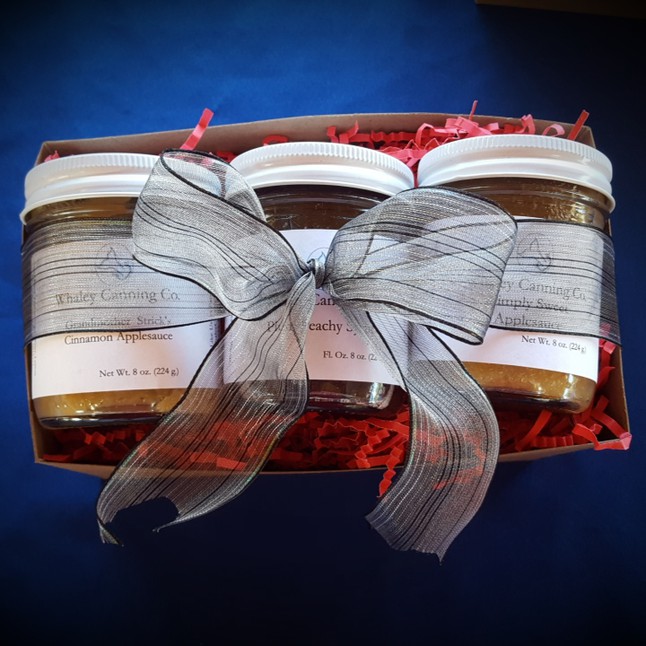
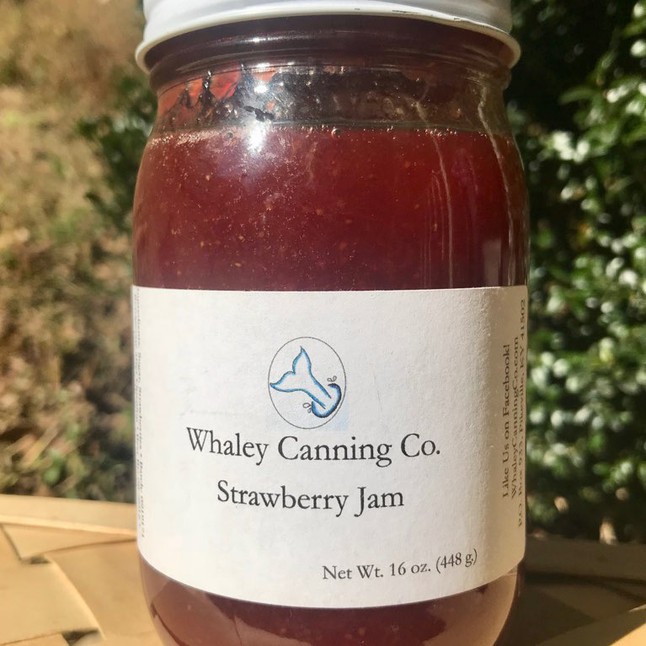
What goes better with baked goods than jams, jellies, and syrups? The Pikeville Market has helped other young entrepreneurs become thriving businesses.  Such as Whitney Whaley, of Whaley Canning Co., started her business just this year after a whirlwind tour of classes and certifications. Whitney was looking for a cottage industry she could do soon after moving to Pikeville and hit upon canning and selling fruit sauces and syrups using old family recipes, like Grandma Strick’s Apple Sauce.

After attending UK’s Food Innovation Center’s Better Process Control School, offered this past spring at the Eastern Kentucky Farmer Conference, Whitney was able to commercially process her products using the commercial kitchen at the Floyd County Extension Office. She met up with Joyce Pinson of the Pikeville Farmers Market who convinced her to sell her products at the market. Business was so good that now, less than one year from starting, Whitney has her products in several local retail stores as well as on her own online store.
A little closer to I-75, in Hazard, you will find Emily Whitaker who like most of us, loves coffee. She loves it so much that when offered a coffee roaster with all the trimmings, she remodeled half of her basement to install a manufacturing kitchen so she could sell locally roasted coffee. Windy Hills Coffee, roasted in Viper, Kentucky made its debut at events in and around Hazard including creating a special blend for an event in Hazard called A Seat at The Table-India where community members can come together and share a meal from a different culture. The reception was so good that Windy Hills coffee can now be found in retail outlets in Hazard and soon to be found in Prestonsburg and Whitesburg too. As market manager for the Perry County Farmers’ Market, Emily’s connection with farmers opened another avenue when farmer friends started adding Windy Hills coffee as a specialty item to their CSA shares.

As noted earlier, farmers’ markets have been entry level opportunities for farmers to sell their products. Most market vendors expand their businesses, like Benette, by having customers come to the farm or like Whitney and Emily through retail markets. But, a few vendors make the scary leap to brick and mortar establishments.

Kristin Smith raises heritage beef and pastured pork in Whitley County on Falkner Bent Farm. She started selling her premium meat products at the Whitley County Farmers Market but sales were slow. “I couldn’t drop my prices so I decided to make tacos so people could taste the difference in my product and buy it. Pork belly tacos. Brisket tacos. Whatever cut wasn’t moving. And it worked. I sold out every week”, she told me in an interview earlier this year.

The Whitley County market vendors became a really tight group and it wasn’t long before they decided they had all they needed, bread, produce and meat, to open a brick and mortar restaurant. And soon the popular Wrigley Taproom and Eatery, a farm to table restaurant in Corbin, Kentucky, was established.


The newest entrepreneurs to using a farmers’ markets as a springboard into business are Lisa and Amy Bourque of Acres of Grace Farm and Bakery in Clay County. Lisa and Amy have been farming on Acres of Grace for about eight years. They believe in being as self-sustaining as possible, so gardening was an easy choice for them

They started selling at the Clay County Community Market about four years ago but what’s interesting is that they did not start by selling produce but instead entered the market to sell Lisa’s artwork, “with a small tray of baked apple hand pies” Lisa told me. Once she saw how much the community loved homegrown and homemade food, she decided to pursue her passion for baking.

The Acres of Grace Bakery, located on Big Creek in Clay County opened this past November. When asked why open a restaurant in such a rural area? Lisa replied “because we really wanted to be a part of the community on a larger scale than what we could produce for farmers’ market. People were asking for our food during the market off season as well so we felt like it was time to take the plunge and fulfill my dreams of opening a small place and do some farm to table for our small area.”

Like Kristin Smith at the Wrigley Taproom and Eatery, the Bourques’ use as much locally sourced food as possible in their meals. When asked why they would open a restaurant on a two-lane road in the middle of one of the poorest counties in the United States, Lisa replied, “Feeding people makes us happy and working side by side makes us even happier. Providing a healthier alternative to our small community is a bonus.”

“Putting your money, where your zip code is” has really been a game changer for folks interested in doing farm to table. Most of the farmers that I worked with at the Floyd County Farmers’ Market, six years ago, grew produce, brought it to the market to sell and went home to get ready for their off-farm job because there wasn’t enough interest in purchasing locally grown food, to make a living.

But farmers’ markets have increased in number and size in the last several years across the Commonwealth. And thanks to the agriculture departments at the University of Kentucky and Kentucky State University, their extension agents, the Kentucky Department of Agriculture’s Kentucky Proud program, and the Farmers Market Support Program of Community Farm Alliance, more and more vendors are becoming entrepreneurs.

Are you a vendor at a Kentucky farmers market? Are you interested in growing your market and your business? Why not check out the Farmers Market Support Program page on our website. Or look into attending the 2018 Eastern Kentucky Farmer Conference February 23rd and 24th. We are Community Farm Alliance where Farm is Foundation.


Uncategorized

Hungry in the Land of Milk and Honey

By Sister Kathy Curtis

Born and raised in Richmond Kentucky, Alisha Mays grew up hungry. “There were many days that all we had to eat was Totino’s pizza rolls drenched in ranch dressing,” she told a group attending the recent Hunger Dialogue gathering at Berea College. Alisha and I were part of a breakout session led by Dr. Nicole Breazeale, Associate Professor of Sociology at Western Kentucky University. The session was on storytelling and the positive impact telling one’s own hunger story can have on social change. Alisha told us what it was like to grow up in poor and hunger.

While the bulk of her story is hers to tell, I can tell you that Alisha, a graduate of Eastern Kentucky University, is currently working on her master’s degree with Dr. Breazeale at WKU in Glasgow. Her theme is self-provisioning in eastern Kentucky with a special emphasis on the social relationship that exists around home gardening. She explained that self-provisioning includes things like hunting, fishing, foraging and most relevant for her purposes, growing a vegetable garden.

Alisha and I first met when she came to Floyd County to meet families who were growing home vegetable gardens. She spent two months sitting on people’s porches and hearing their stories. During the Hunger Dialogue gathering she told of one of her last days in eastern Kentucky before heading back to Bowling Green.

It was August and Alisha was visiting a family that had befriended her while she was in Floyd County,“It was pouring the rain and because I don’t do so good at driving holler roads in the rain, I was sitting on the porch waiting for it to stop. I looked around me at all the corn and the tomatoes. There was a garden in front and another big garden next to that; the neighbors had a garden too. All around me was food!   [As a child] I remembered hearing a stat once that food has to travel 1400 miles to get to your plate and I remembered thinking “Yes!” because there isn’t enough in the world to feed everybody and that’s why I am hungry.” Talking about her time in Floyd County, Alisha went on to say “I have never seen so much food in my life. I have been in grocery stores but this was different.”

By listening to their stories, Alisha had built a relationship with the family she was visiting and she knew that if she were hungry they would be totally fine with her picking some corn or digging potatoes. Those of us who live in the mountains know this to be true. Care of family and neighbor is ingrained in Appalachian people. In an east Kentucky holler, Alisha experienced a food system built on relationships. Unfortunately, that system does not translate well in our current culture.

Kentucky’s food system is broken, especially for those who live in chronic poverty. Even here in the mountains, too few people know how to grow and preserve food for their families even if they have the land and the physical ability to grow it themselves. Too little healthy food is found at regional food pantries. Few and far between are green spaces where people can grow even some of their food needs. But, there are signs here in Kentucky that this situation is changing.

For example, Berea College’s Grow Appalachia program is, the largest home gardening program in the United States, helps families meet their food needs by providing hands-on training and resources. Grow Appalachia currently works with “communities in six states throughout central Appalachia.” Their mission is, “working to combat food insecurity and malnutrition”. Grow Appalachia and its partners have worked directly with more than 4,300 families to produce nearly three million pounds of healthy, organic produce.”

Another example is In an effort to reduce food waste and meet the needs of both Kentucky farmers and hungry citizens, the Kentucky Association of Food Banks (KAFB) has developed its Farms to Food Banks Program. According to its website in 2016 the Farm to Food Banks Program benefitted hungry Kentuckian in all 120 counties. 385 Kentucky farmers from 67 counties were paid an average of $2000 for their surplus and second grade produce. And the KAFB, through their seven-member food banks and 520 partner agencies, distributed 3,110,600 pounds of fresh produce that otherwise would have been plowed under.

And finally, in the spring of 2016 Kentucky Agriculture Commissioner Ryan Quarles launched the  Kentucky Hunger Initiative. The first-of-its-kind effort in Kentucky brings together farmers, charitable organizations, faith groups, community leaders, and government entities to help reduce hunger in Kentucky. Commissioner Quarles has made reducing hunger, in both the rural and urban parts of Kentucky, a major priority during his time in office.

With input directly through community, the Kentucky Hunger Initiative task force has developed three goals to address Kentucky’s growing hunger problem:

Goal 1: Build and expand collaborative partnerships between the public and private sectors that will minimize hunger in Kentucky.

Goal 2: Strengthen Kentucky’s food-distribution infrastructure to enable farmers to better serve the needs of Kentuckians.

Goal 3: Increase education and public awareness of hunger that affects Kentuckians of all ages.

Right about now you may be wondering why I even bring these statistics and organizations up. After all, Breaking Beans is about telling the story of farming and the local food system in eastern Kentucky. Well, I used to say that food system work is collaborative work because, “everybody eats”. But after hearing Alisha’s story, I realize that is not true. According to the Kentucky Association of Food Banks, “Over 700,000 Kentuckians, or 1 in 6, do not always know where their next meal will come from. More than 1 in 5 of Kentucky’s children lack consistent access to enough food for a healthy, active lifestyle.”

Hunger persists in Kentucky because it remains faceless. That’s why Alisha’s story is so important, and far too common. In a state that has the agricultural heritage that Kentucky has, that is unacceptable.

If you feel the same, here are some ways that you can help.

  • Start in your own community by finding out what your local food pantry needs and get it for them. Most of them need volunteers more than they need food. Check the Kentucky Association of Food Banks website for a pantry near you.
  • Start a home or community garden and share with your friends and neighbors. Grow Appalachia is a great place to start.
  • Join Community Farm Alliance. Our Vision is a food system that provides nutritious food for Kentuckians in a manner that is socially, economically, and ecologically sustainable. We envision a system vital to the state’s economy.
  • Write your own hunger story and tell it. The only shameful thing about hunger in our country is that it still exists.

Imagine sitting on the front porch of a house at the head of the holler surrounded by corn, beans, tomatoes and okra and thinking, “Isn’t it wonderful we live in a place where good food is accessible to all.”

Uncategorized

My Week on the Farm

By Sister Kathy Curtis

First off, let me clarify that in no way do I consider the week I spent at Four Petal Farm a typical week for a small farmer. Cathy and John Rehmeyer, owners of Four Petal Farm,  were able to take a week’s vacation in May because their primary focus is cool weather crops, like  brassicas, that they grow all winter. So, when they asked if I could stay at the farm to watch over things, I knew there would be little heavy work to be done. Cathy pointed out that it was a way to get some time away and enjoy the solitude. The fact I live at a monastery and this was a selling point for getting away from home for a week, did not slip by me.

I visited the farm a week before the Rehmeyers were to leave for vacation to get the lowdown on the routine chores that needed to be done and for my own peace of mind. Since I started working around farmers, I have come to recognize and appreciate the hard work that goes into growing the food that I used to take for granted.

I wanted to be sure I was up to the task. So, John Rehmeyer and I walked around the farm. He instructed me on what needed to be done and when and I practiced things like cranking up the high tunnel sides. My main responsibility was making sure the animals were fed and that the high tunnel was watered and the sides opened and closed every day. I felt like I was up to all the tasks, except one. I did not feel comfortable walking up and down the steep hillside twice a day to feed and water the goats. Fortunately, John had a neighbor who was willing to take on that chore.

John left me a simple schedule for the chores that looked something like this: High tunnel: open tunnel sides and door, water as needed, harvest zucchini and summer squash as needed, close at night. Animals: morning feed and water dogs and cats, water rabbits; afternoon feed dogs, rabbits and parakeets and spray iguana. Make sure everyone stays watered. Sounds simple enough, right?


Here’s my journal entries about what happened that week:

Friday, day one: I got to the farm by 9:00am. High tunnel sides were open and Rick (the neighbor) had already fed and watered the goats so I did the rest of the morning feedings and turned on the drip irrigation for the high tunnel. It had to run for about two hours. Then I remembered that the seedlings needed to be watered from overhead which required that I change from drip to hose. I remembered a little too late that you had to turn the water off before changing from drip to hose. I won’t forget that again. I struggled with putting the sides down on the tunnel. Gravity won.

Saturday, day two: I slept well and turned off the 6:30 alarm (after all it was Saturday), so at 7:45 I realized I had work to do. I went to the tunnel first because I didn’t know how hot it would get when the sun hit it with the sides down. Cranking the sides up was not too hard. I noticed I had a bruise from where the handle had hit my arm the night before. I decided that I would probably gain some arm strength this week. The tunnel only needed the drip ran so there were only two trips up to the spigot.

Sunday, day three: I did not want to get up.Then I remembered that dogs, cats and rabbits were depending on me and all those plants in the high tunnel! According to the gizmo in the window, the humidity was 99% and it wasn’t even 10:00. Climbing the hill was getting easier but cranking up the tunnel sides was still hard and bending over to harvest the squash had my back reminding me that my day job was at a desk. One of the hardest things is remembering to change boots when going between the animals and the tunnel to avoid contaminating the produce. And the rabbit house needs to be cleaned out but I think I will wait until the humidity drops and hopefully the odor will too.

Monday, day four:  It was cooler today so I cleaned out the rabbit house and that’s how I found out both Rick and I had been feeding the rabbits. No wonder they haven’t been excited to see me. In the high tunnel, I found evidence of squash vine borer this morning while harvesting. According to my research, by the time you see the damage it is too late to stop it. I’m feeling a little anxious today.

Tuesday, day five:  I have been watching the upper field to see if it needs water. It has been hot but they are calling for rain tonight so I think it will be OK. There are so many decisions to make. It’s not like at home where we are growing some peppers and tomatoes and if something happens we can just go buy them. These plants are a family’s livelihood. It takes a lot of faith to be a farmer.

Wednesday, day six: There is a rhythm to the day that starts and ends with the dogs. They are the most persistent. I went to Pikeville today to do an interview and raced back to the farm to close up the tunnel and feed everyone before a really bad storm hit. The power went out for a while so I sat on the front step and just watched the mist and the birds.

Thursday, day seven: I am harvesting about three bags a day of squash and zucchini. It is really neat to see the bees wallowing in the pollen in the squash flowers. It’s almost like they are drunk with it. I had to be in Whitesburg this evening so I left the farm about 4:00 after feeding and watering everyone. I had a real problem trying to get the tunnel door shut. I wasn’t expecting on being back until late and knew the deer would see an open door as a gilt edged invitation to supper. After searching with no luck for bungee cords, I ended tying the door shut with my bandana. When I got back to the farm and checked, I was relieved that the door shut with no problem and nothing had suffered from the heat.

Friday, last day: Because both Rick and I both fed the rabbits earlier in the week, the feed was gone. So I decided to go to the local Walmart and buy some rabbit food. After three stops with no luck I finally found some at the Tractor Supply in Paintsville, a round trip of fifty miles.

Walking up the hill to the rabbit house for the last time before returning home, I looked over and there sitting on the steps of an out building were four little kittens. It appears that one reason the cats were so crazy to be fed all week was that one of them was nursing her brood.

Later that afternoon, as I drove out the holler, I stopped to say goodbye to Rick and thank him for all his help. He invited me back anytime to “sit on the new deck a spell”. He reminded me of what is good about country living. The work is hard, the outcome isn’t guaranteed and the pay is minimal at times but the rewards are plentiful. I not only had a bag full of zucchini, I went home with my heart adjusted. Like the dogs resting in the shade, the bees drunk on pollen and the kittens frolicking under the shed, I had stepped back into the rhythm of nature. And found peace and fullness there.

Several weeks have passed since my experience at the Four Petal Farm. I have fallen back into my routine of work, prayer and leisure. As I was writing this piece, the thing I remembered most about my time on the farm was how vital I felt. I had an important role. From making sure the plants and animals were fed and watered to harvesting the squash, my hands were needed. As I sat on the porch, sharing the evening cool with the dogs, I understood the difference between making a living and making a life. Whether growing beets or beef, farming at any level is hard work. In this culture of fast food and faster internet, farming is a lifestyle that has to wait, for the rain, for the harvest, and for the calf to be born.  What I hope they don’t have to wait for is our gratitude. When you sit down to your next meal, why not say a prayer of thanks for farmers. Or better yet, the next time you are at the farmers’ market, thank them face to face.

Uncategorized

Breaking Beans Radio Show #19: Holliday Farms, Appalachian Meats, and the Extension Service

Aired: August 2, 2017

On this episode of Breaking Beans Radio Show you will hear from Peggy Conway of Holliday Farms which is a Perry County family farm with an educational slant. She is accompanied by Jon Reinford of Appalachian Meats in Floyd County who shares his thoughts on locally sourced meat products. Lastly, y’all will hear from Knott County’s UK Agriculture and Natural Resources agent, Chad Conway, who talks about cattle production on reclaimed mine sites.

Holliday Farms, Chad Conway teaches students at one of many events hosted at their family farm. 


John Reinford, Appalachian Meats

Find other episodes and Breaking Beans stories here:

http://cfaky.org/blog

Download this and other past episodes here:

https://archive.org/details/@breakingbeans

The Breaking Beans Variety Radio Show airs on 88.7 WMMT (online too!) the first Wednesday of every month at 6pm featuring stories, interviews, recipes, and news from the food and farming worlds in the Appalachian region!

Hosted by Breaking Beans Fellow Sister Kathy Curtis.

breakingbeansWEBsm


Breaking Beans: The Appalachian Food Story Project is an initiative of Community Farm Alliance to tell the story of how local food and farming in Eastern Kentucky can contribute to a bright future in the mountains. Eastern Kentucky is at the point where it can foster a food system that is equitable and accessible to all, provides fresh nutritious food, and serves as an economic generator that builds community wealth. With a rich history of food and farming, stories of how Eastern Kentucky is already growing in that direction – and the challenges along the way – are important for informing people and policy alike.

Uncategorized

The Bee Bomb

by Sister Kathy Curtis

Jacob Vincent and Joni Nelson with KSU’s wooden bee hive sterilizer at their Small Farmer Conference at the Wilkinson/Stumbo Convention Center at Jenny Wiley State Park


Do you know how you have your weekend all planned out and then something happens and the next thing you know you are doing a new thing? Well that happens to me a lot, especially once farmers’ market season opens. My intention for this past Saturday was to start my day in downtown Prestonsburg for the opening day of the Floyd County Farmers’ Market. After I planned to scoot down Highway 23 to the Pea & Salat event at the Pikeville Farmers’ Market at their new location right next to the Pikeville High School.

I fine tuned those plans while driving home from Harlan County’s Local Food, Local Places gathering last Friday afternoon. It had been a long and rainy couple of days and I was ready to spend a quiet evening resting up for a day of market visits. And then I turned on to Bucks Branch (the road the Monastery is on) and about a half mile in, water covered the road.

Well, those of you who know me know that I have a well deserved respect for high water of any kind so I decided to go around. Here in eastern Kentucky that means driving an extra twenty miles or so—piece of cake.

On my way around I remembered that Kentucky State University’s College of Agriculture was having their Small Farmer Conference at the Wilkinson/Stumbo Convention Center at Jenny Wiley State Park; And I needed to meet up with one of their staffers, Kevin, to get some paperwork for one of our staffers, Jann. “Might as well go now” I said to myself. The next thing I knew, I was spending Saturday learning about bees.

Saturday morning was bright but soggy due to the buckets of rain that had fallen the previous evening. I was pleased that I had decided to spend the day in the cool, air-conditioned conference center instead of a humid parking lot.

Margaret Reid from Reid’s Apiary in Ohio told us all about the importance of queen bees, I also sat in on part of a session on urban agriculture before I had to leave for a while to check on a friend’s farm that had been flooded by all those buckets of rain. I returned in time for a famous Kentucky State Lodge buffet complete with banana pudding. During lunch I got to watch my friend Wayne make a little girl’s day by gifting her with a bee-keepers jacket complete with hat and netting. I wish you could have seen the smile on her face. It was priceless. The event was pretty enjoyable.

The best part of the event for me came right after lunch in the parking lot behind the convention center where Joni Nelson and Jacob Vincent fired up KSU’s wooden bee hive sterilizer. It was awesome!

The sterilizer looks like a giant pressure canner laid on its side. Jacob loaded the wooden hive parts into the back of the canister and then bolted it shut using a giant ratchet. He needed 225 pounds of pressure on each bolt to seal the canister. Once the lid was secure, he lit the propane gas burners and started heating the water to make steam. The pressure got to around 30psi and the temperature was raised to 250 degrees. It was held there for about thirty minutes, and then released through a vent at the top of the canister. “It used to vent out the bottom”, Joni told me, “but that gets pretty hot when you let it loose. Plus, it leaves a pretty good sized hole where it vents. I’d really like a steam whistle on the vent pipe. That would be cool.” The high temperature and sustained pressure cleans wax and debris off the hive pieces, killing mites, insects and bacteria and the wax collects in the bottom. “We can test the wax to see what pathogens were on the hives. That’s all part of the research the university is doing on bees. It is very helpful when the beekeeper tells us what they believe the problem is so we know what to look for” says Joni.

The Wooden Hive Sterilizer was purchased with Tobacco Settlement money and can be brought to locations all over the Commonwealth. “All we need is a space that is about 100 feet from a building, has a clearing of 30 to 50 feet around it with water and 110 volt electric hook-ups. Currently, there is no fee for the service but we expect to add a small charge to the service to help make it sustainable” says Joni. She believes the most effective arrangement would be if groups of beekeepers in a region got together and scheduled the sterilizer to come to their clubs. Then the unit could go from one group to the next. “Depending on hive sizes, the sterilizer can hold about 20 hives. Wooden hives only though, the plastic ones warp in the heat” says Joni.

In addition to the Wooden Hive Sterilizer mobile unit, Kentucky State University also has a Fruit and Vegetable Mobile Processing Unit. The Mobile Processing Unit is a certified mobile commercial kitchen which can be brought to locations throughout the Commonwealth and used by farmers to process their fresh fruit and vegetables into value-added products (such as jams, jellies, pickles, salsa, and frozen bagged fruits and vegetables).

For more information on these units and to learn about other opportunities KSU offers contact Joni Nelson, Rural Development Extension Associate at joni.nelson@kysu.edu.


Breaking Beans: Appalachian Food Story Project is an initiative of Community Farm Alliance to tell the story of how local food and farming in Eastern Kentucky can contribute to a bright future in the mountains. Read the stories at cfaky.org/blog