Fiber Podcast, Woven Roots

Woven Roots Podcast #7 Fiber Tells a Story: Flax, Hide Tanning, and the Magic of Fiber Arts at Cedar Creek Farm

Aired: December 12, 2017

In this special final episode of Woven Roots, Appalachian Transition Fellow, Sam Hamlin, joins Candace Mullins and Micah Wiles for their first Fiber Day on Cedar Creek Farm in Somerset Kentucky.

Nestled in the hills of Pulaski County, Cedar Creek Farm is operated by Micah Wiles and his family. It is home to a multitude of agricultural endeavors, including: raising heritage breed Dexter cattle for grass-fed beef, operating a vineyard and winery, and caring for vegetable gardens and fruit and nut trees, and tanning a variety of hides using sustainable practices. In addition, Candace Mullins grows a small plot of flax on the farm each year and is experimenting with small-scale linen production. For more information on the Wiles family’s diversified farm, see Sister Kathy Curtis’ Breaking Bean Piece, Cedar Creek Farm: A Model for Sustainability.

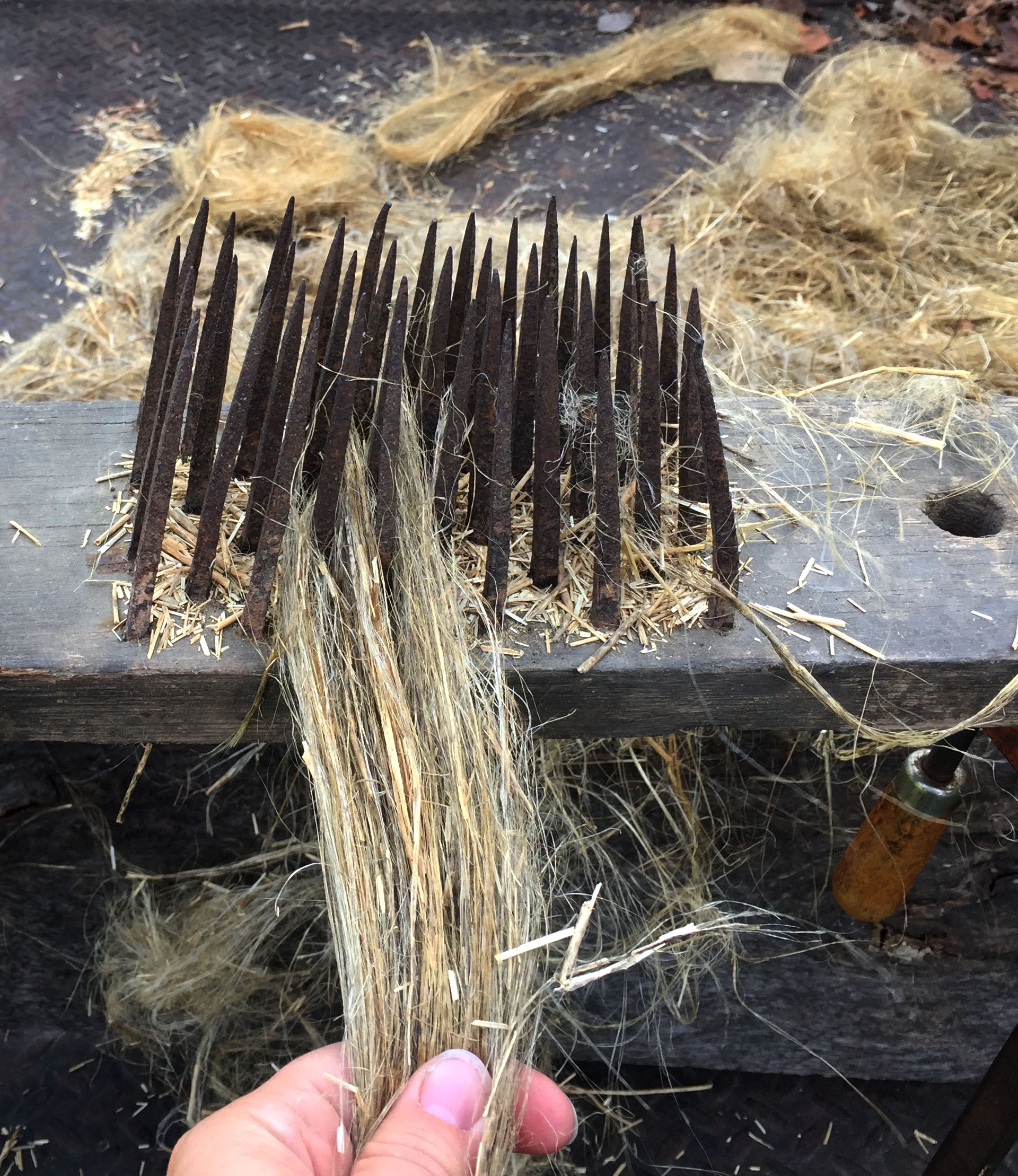
In late October, Candace and Micah hosted their first Fiber Day at the farm, with the goal of bringing together farmers, artisans, and all those interested in working with natural fiber to build relationships and to learn from one another. After eating a delicious, home-made lunch, participants took the opportunity to explore different modes of fiber production including natural dyeing, spinning, and hide tanning. Participants also had the opportunity to hand-process flax fiber, using a break and hackles, a method of processing bast fibers that has been used for centuries.

To begin this episode of Woven Roots, Sam Hamlin talks with Candace Mullins to learn more about her work growing, processing, and spinning flax for linen. Candace shares about her experience discovering the power of weaving and Appalachian fiber arts at Berea College, her vision for collaborative fiber production in Kentucky, and finally, on the power of fiber to tell stories.

Next, Sam Hamlin talks with Micah Wiles about hide tanning on the farm. Micah is committed to ethical and sustainable tanning practices. Unlike many contemporary large-scale tanneries that use toxic heavy metals, Micah uses natural tanning methods that are friendly to the environment to create quality, durable hides. In addition, he sources from local materials. He shares about the tanning process, as well as his visions for creating high quality, natural fiber products.


To close the episode, Sam sits down with Phillip Willet, master spinner and weaver in Berea, Kentucky. In addition to creating beautiful yarns, hand-dyed with natural dyes such as indigo and marigold, Phil is looked up to by many aspiring weavers as a teacher and mentor. Phil talks about his journey into the world of fiber arts and about the pleasure of working with natural fibers.


For information on Cedar Creek Farm, including their tannery, visit their website at: http://www.cedarcreekfarmky.com/

Check out Sam Hamlin’s Woven in Kentucky: An Assessment of the Natural Fiber Textile Sector in Appalachian Kentucky to learn more about Community Farm Alliance’s work with natural fiber.


Fiber Podcast, Woven Roots

Woven Roots Episode #6: Made in Kentucky: Carlisle’s Textile Journey

Aired: November 30, 2017

Nestled in the rolling hills of Kentucky’s Bluegrass region, the town of Carlisle is home to around 7,000 people. Carlisle used to be home of two manufacturing plants for Jockey International, a textile manufacturer and distributor of underwear and sleepwear for men, women, and children. In 2000, Jockey closed up its sewing plant in Carlisle, laying off 326 people. Four years later Jockey moved its operations to Mexico and closed its Carlisle knitting plant, as well as the nearby Maysville and Mount Sterling facilities, affecting 440 total jobs in the region. Jockey’s closing had devastating impacts on the once bustling town of Carlisle, as young people began to leave in search for work elsewhere and high-wage jobs nearly disappeared. However, the economy of Carlisle is currently growing with a movement towards regional economic development and textile revitalization.

In early autumn, Appalachian Transition Fellow, Sam Hamlin sat down with Tracy-Pratt Savage, Development Director in Carlisle-Nicholas County, and also member of Carlisle-Nicholas County’s Chamber of Commerce, to talk about what folks are doing to revitalize textiles in the area through innovative production that taps into high-end and niche markets. For example, high-end baby bedding company, Liz and Roo, moved its operations to Carlisle in 2016. Custom sewing for Liz and Roo is done at the former Jockey International plant, now owned by Carlisle-owned and operated, 3 Star Industries, which sews premium covers for utility vehicles and manufactures windshields.

One of the challenges that many emerging rural textile companies face is a shortage of skilled workers to take newly-created positions. Tracy talks about how folks in Carlisle are attempting to address this problem though an exciting partnership with the Maysville Technical and Community College to develop a textile and sewing certificate program to assist young people in developing the skills needed to work in textile manufacturing.

The episode concludes with a discussion about an approach to economic development that Tracy calls rural regionalism. Rather than going it alone in efforts to revitalize their economy, folks in Nicholas County are working with other small towns in surrounding counties to build up region-wide textile manufacturing, tourism, and community collaboration.

For more information on Carlisle’s history and current endeavors, visit the Nicholas County Economic Development Authority at nicholascounty.ky.gov.

This December, keep a look out for our special final episode on hide tanning, flax, and weaving arts at Cedar Creek Farm.


Fiber Podcast, Woven Roots

Woven Roots Fiber Podcast #4: Farm to Fashion: Lan Mark Farm and Feltloom

Aired: November 8, 2017

In this episode, Appalachian Transition Fellow Sam Hamlin travels to central Kentucky to hear from farmer, mill owner, and fiber innovator, Lanette Freitag of Lan Mark Farm and Feltloom. We’ll hear about how one Kentucky farming family created a needle felting machine that has made a big impact on small-scale fiber production around the globe.

Photo credit to Ruth Ann Smith.

In the Central Kentucky, just outside of Sharpsburg, Lanette Freitag and Don Bowles ­operate Lan Mark farm, where they raise sheep, llamas, and alpaca. They also operate a small wool mill where they process and dye their own fibers from their farm. Lan Mark Farm is home to the Feltloom, which is a needle felting machine capable of processing natural fibers into felt cloth. What began as a creation that Lanette and Don developed to more efficiently process their own fiber, has grown into a global processing tool for small-scale fiber farmers, processors, and designers across the world. Feltloom is now sold in 17 countries around the globe.


Listen to this interview with Lanette Freitag to hear about her work on Lan Mark Farm, Feltloom, and the Feltloom’s annual Farm to Fashion show held right here in Kentucky. To learn more about Lan Mark Farm and the Feltloom, and to view their product line, visit their website at http://www.feltloom.com/

Woven Roots: The Appalachian Fiber Story Project is an initiative of the Community Farm Alliance to tell the story of how fiber farming, arts, and entrepreneurship in Appalachian Kentucky can contribute to a bright future in the mountains.


Fiber Podcast

Woven Roots Fiber Podcast #3: Kenaf

Aired: October 11, 2017

Host Sam Hamlin

Photos by Jake Degler; courtesy of Tree of the Field

We’re excited to announce that we’re launching a new storytelling project dedicated explicitly to natural fiber! On Woven Roots: The Appalachian Fiber Story Project, we will tell the story of how Kentucky farmers, artists, and entrepreneurs are building strong regional economies around natural fiber.

Kentuckians have a rich history of growing plant and animal fibers to make the most basic of human necessities, such as clothes, shoes, and rope, to spinning fiber to weave together beautiful quilts, tapestries, and rugs. While many fibers are now made from synthetic materials, there is a movement growing to return to natural fiber textile production. Natural fibers that come from plants and animals such as flax, kenaf, hemp, wool and alpaca fleece can produce fine quality textile right in our backyard in ways that aren’t harmful to our environment. Supporting the natural fiber sector benefits community farmers, as well as the health of our planet.

In this episode of Woven Roots, CFA Appalachian Transition fellow, Sam Hamlin, interviews three women about their innovative work with kenaf. Kenaf, which has been grown for thousands of years for fiber, is an annual row crop in the same family as cotton and okra. It can grow as tall as 20 feet, and can be harvested and processed for the fiber in its stalk. Though most kenaf grown internationally is produced in India and China, kenaf grows well in Kentucky and the U.S. South and can be used to make a variety of products, including rope, twine, packaging materials, paper and cardboard, and even biodegradable plastics.

Listen in to this episode of Woven Roots to hear about kenaf’s present, future, and past in Kentucky. Robin Mason, founder of Tree of the Field, talks about her innovative work with kenaf across the state, including in eastern Kentucky on top of mountaintop removal sites, as well as the potential future of kenaf in the sustainable energy sector. Elisa Owen, cofounder of EcoBridge Industries, speaks with Sam Hamlin about the potential of kenaf to have big impacts on the economy in Kentucky and on the production of biodegradable materials. We close out the show with a conversation between CFA staff Maggie Smith and Sam Hamlin and Irene Thornsburg, a long-time member of the CFA, who grew kenaf in the 1990s as part of a CFA program to support tobacco farmers in figuring out new economic opportunities.

Thanks for listening in to the Woven Roots Fiber Podcast. We’re looking forward to bringing you stories from farmers, producers, artisans, and others who are building our regions fiber sector to benefit our people and our planet. Make sure to keep a look out for our future podcasts on hemp, natural plant dyes, and more stories from the Appalachian fiber world.

Fiber Podcast

Fiber Podcast #2: Alpaca, Fiber Farming, and the Emerging Slow Fashion Movement

Posted: July 12, 2017

Hosted and written by Appalachian Transition Fellow, Sam Hamlin

In late April, I traveled with my colleague, Appalachian Transition Fellow, Hope Hart to Alvina Maynard’s alpaca ranch just outside of Richmond, Kentucky. We were ready to learn more about alpacas, fiber farming, and Alvina’s perspective on how to grow the natural fiber sector in Kentucky. After winding through a curvy, tree-covered road we came upon the beautiful green rolling hills of River Hill Ranch, where Alvina raises anywhere from 75 to 100 alpacas, depending on the time of year. We sat down with Alvina on a sunny, 83 degree, April day to interview her for CFA’s first ever Breaking Beans Fiber podcast.

Alvina explained to us that she started alpaca farming through a combination of her love of the outdoors, inspiration from other veteran-turned-farmers, and by following her calling. “I wanted a space that provided genuine connection; to experience both adventure and tranquility at the same time. So, alpacas…not only are they quiet animals but they’re relatively small livestock, they’re easy to manage, they have padded feet instead of hooves, so all of those aspects appeal to having children around.”

First named as official livestock in the 2008 Farm Bill, alpaca farming is a relatively new in the U.S. As a growing sector, there are lots of opportunities for new farmers and entrepreneurs to explore this unique industry. Alpaca are non-aggressive, curious animals who produce an incredibly soft fleece that can be used to make sweaters, socks, hats, mittens, and much more.

Each April, Alvina completes an annual alpaca shearing at River Hill Ranch. She sorts through each fleece and determines its quality and She sells to a variety of processors on different scales, all who transform raw fleece into yarn and sometimes into value-added (or finished) products, such as socks and hats.  Alpacas are multi-purpose animals: on the River Hill Ranch website, you can find beautiful alpaca shawls, gloves, hats, headbands, boot inserts and more for purchase. In addition to fiber products, Alvina also sells alpaca meat. Alvina explained that alpaca meat “tastes like sweet version of beef, but with the texture of tuna. We want to make sure nothing goes to waste.” You can visit Good Foods Co-op in Lexington, as well as Game, a restaurant in Louisville to purchase some for yourself. You can find all of Alvina’s products at the Richmond and Lexington farmer’s market in the summers or year-round on the River Hill Ranch website.

During our time with Alvina on River Hill Ranch, we had the opportunity to learn about a variety of fascinating topics related to alpaca farming: from grass management, to silvopasturing, to the exciting possibilities of using plants, such as pokeberry and goldenrod, as natural dyes for textiles. We even had the opportunity to assist Alvina in herding her female alpacas across the pasture by moving electric fencing and putting my four-wheel drive to good use going up and down the rolling hills of her ranch.

But, perhaps the most exciting part of the day was getting to talk with Alvina about her vision for the larger natural fiber and slow clothes movement. Alvina shared that, “caring for the world starts with caring for the earth and I am super excited to be a part of this. It found me. And this is a way that we can impact positive change in going forward by bringing that awareness to our relationship to our clothes and how that impacts our planet. I’m at farmers market and still a lot of people look at me with confusion in their eyes….because not a lot of people understand where their clothes come from.”

As I have embarked on my current project mapping the natural fiber sector, I have noticed the confusion that sometimes appears on people’s faces as I tell them that I work for a farmer advocacy organization. Due to the rise of synthetic fibers and throw-away consumer culture, most of us don’t have knowledge about where our clothes come from or what kinds of labor went into making them. In our interview, Alvina pointed out that “the fashion industry has made it so that they want us back in the store every three to six weeks. And so clothes have become disposable, because synthetic fibers are cheaper, they’re made predominately by synthetics, which are plastic. They’re not biodegradable. So not only have we increased our consumption rate of clothing, but we’ve also made them out of a non-biodegradable substance that is going into a landfill. This return to natural fibers coming back around to being mainstream is going to be a huge environmental impact.”

The slow fashion movement, is gaining traction as many people are becoming more conscious about the environmental and human impact of the current global textile production system. Slow fashion advocates and farmers, like Alvina, are leading the way in reviving the natural fiber textile sector in Kentucky, and beyond. “Change will really happen in our society, when it is driven more by demand” Alvina pointed out. “Not a lot of people understand where their clothes come from or what they’re even made out of…In recent history, the slow food movement has seen a lot of success where it has brought that awareness mainstream, where people are asking questions now of where their food comes from, what’s in their food, and what went into making, growing, processing their food…So I’m really excited that the slow fashion and slow clothes movement is also starting to gain traction, and people are starting to ask those questions now, where their clothes come from.”

For more from Alvina, make sure to listen to our extended interview that includes more stories about fiber farming, alpaca, and the local clothes movement. You can find out more about River Hill Ranch on their website, Facebook and Instagram pages.

To keep up with Community Farm Alliance’s natural fiber sector mapping project, check out our website and Facebook page or sign up for our CFA’s monthly newsletters by becoming a member.

Lastly, be on the look out for opportunities to support your local fiber farmer at your farmers market and on our blog in the coming months.