Uncategorized

From Market Vendor to Entrepreneur

Written by Sister Kathy Curtis, Edited by Maggie Smith

My first experience with a farmers’ market was in 2011 in Floyd County, Kentucky where I volunteered to help the farmers get set up, run errands, and put out about a million signs. I decided I wanted to help them because I am interested in anything that can bring income into our region and who doesn’t like fresh food. In my six years working with the market vendors I came to realize that farmers’ markets are not just a place to buy fresh food straight from the farmer but also an incubator for small businesses.

Over the years, I have had the privilege to make friends with several women who started out at a farmers’ market and have expanded their business beyond summer afternoons.

Before I tell you their stories, I wanted to share that Community Farm Alliance was a driving force behind the passing of Kentucky House Bill 391 (which was signed into law November 1, 2003) It opened a lot of doors for farmers like Benette who grow a product and then “add value” to it by canning, preserving or baking it into something that can be sold for a higher price. Limits for home processors, like Benette, is that their products can only be sold at farmers’ markets, certified Farm Bureau roadside stands or from the farmer’s home. Commercial licenses don’t have those limitations. And two local women have used their local farmers market as an entry into retail sales with their commercially processed products.

Here are their stories, and the on the ground results of how CFA has supported the farmer:

Benette Howard is definitely a farmer. She and her husband own one farm in Johnson County and she inherited two others. For her, farming was a way of life, raising everything, even beef, pork, and chickens. “You didn’t go to the store every time you wanted something. If you didn’t have it, you did without” said Bennette. She also told me working in the garden was instilled in her as a kid. She remembered when she first started helping her uncle, he set her to pulling weeds in the onions. “I guess they were easy to tell from the weeds.”

Benette first set up at the Floyd County Farmers’ Market towards the end of 2012 market season bringing pumpkins, gourds and colored corn. She did well enough to plan on setting up the entire 2013 season. However, the cool wet spring of 2013 put her behind and that’s when she heard about home based processing. Home based processors may produce and sell low risk products such as fruit jams, jellies and syrups, fruit butters, baked goods, prepackaged mixed greens or herbs, and dried fruits, vegetables, nuts or herbs. She started making Bea’s Jams & Jellies and they went over so well she added baked goods. “When I wouldn’t sell all my fresh stuff, I brought it home and canned it to resell at market” this was Benette’s strategy.

Benette now sells her canned goods during season at both the Floyd County and Pikeville farmers markets. And once the markets close down she still has “a lot of people that call wanting canned stuff and baked goods”.
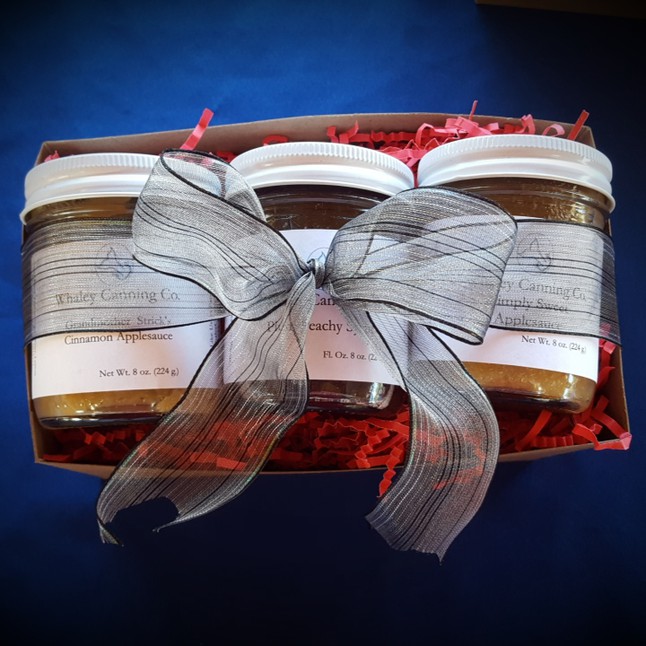
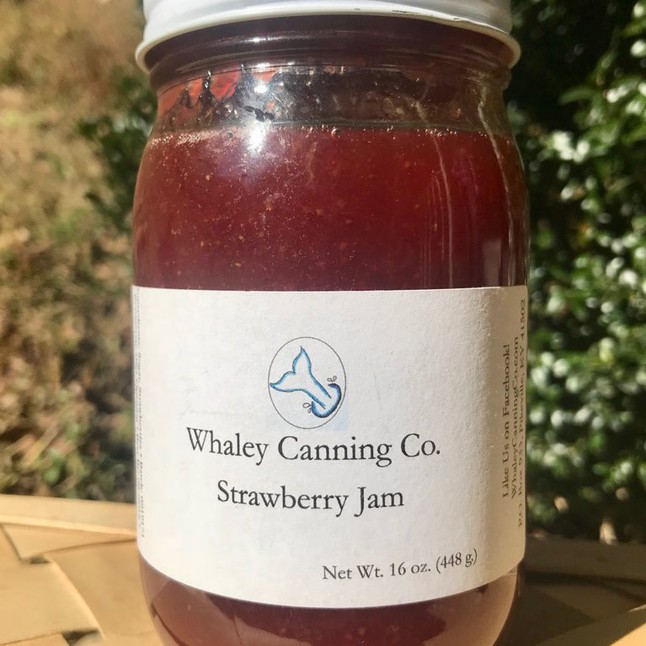
What goes better with baked goods than jams, jellies, and syrups? The Pikeville Market has helped other young entrepreneurs become thriving businesses.  Such as Whitney Whaley, of Whaley Canning Co., started her business just this year after a whirlwind tour of classes and certifications. Whitney was looking for a cottage industry she could do soon after moving to Pikeville and hit upon canning and selling fruit sauces and syrups using old family recipes, like Grandma Strick’s Apple Sauce.

After attending UK’s Food Innovation Center’s Better Process Control School, offered this past spring at the Eastern Kentucky Farmer Conference, Whitney was able to commercially process her products using the commercial kitchen at the Floyd County Extension Office. She met up with Joyce Pinson of the Pikeville Farmers Market who convinced her to sell her products at the market. Business was so good that now, less than one year from starting, Whitney has her products in several local retail stores as well as on her own online store.
A little closer to I-75, in Hazard, you will find Emily Whitaker who like most of us, loves coffee. She loves it so much that when offered a coffee roaster with all the trimmings, she remodeled half of her basement to install a manufacturing kitchen so she could sell locally roasted coffee. Windy Hills Coffee, roasted in Viper, Kentucky made its debut at events in and around Hazard including creating a special blend for an event in Hazard called A Seat at The Table-India where community members can come together and share a meal from a different culture. The reception was so good that Windy Hills coffee can now be found in retail outlets in Hazard and soon to be found in Prestonsburg and Whitesburg too. As market manager for the Perry County Farmers’ Market, Emily’s connection with farmers opened another avenue when farmer friends started adding Windy Hills coffee as a specialty item to their CSA shares.

As noted earlier, farmers’ markets have been entry level opportunities for farmers to sell their products. Most market vendors expand their businesses, like Benette, by having customers come to the farm or like Whitney and Emily through retail markets. But, a few vendors make the scary leap to brick and mortar establishments.

Kristin Smith raises heritage beef and pastured pork in Whitley County on Falkner Bent Farm. She started selling her premium meat products at the Whitley County Farmers Market but sales were slow. “I couldn’t drop my prices so I decided to make tacos so people could taste the difference in my product and buy it. Pork belly tacos. Brisket tacos. Whatever cut wasn’t moving. And it worked. I sold out every week”, she told me in an interview earlier this year.

The Whitley County market vendors became a really tight group and it wasn’t long before they decided they had all they needed, bread, produce and meat, to open a brick and mortar restaurant. And soon the popular Wrigley Taproom and Eatery, a farm to table restaurant in Corbin, Kentucky, was established.


The newest entrepreneurs to using a farmers’ markets as a springboard into business are Lisa and Amy Bourque of Acres of Grace Farm and Bakery in Clay County. Lisa and Amy have been farming on Acres of Grace for about eight years. They believe in being as self-sustaining as possible, so gardening was an easy choice for them

They started selling at the Clay County Community Market about four years ago but what’s interesting is that they did not start by selling produce but instead entered the market to sell Lisa’s artwork, “with a small tray of baked apple hand pies” Lisa told me. Once she saw how much the community loved homegrown and homemade food, she decided to pursue her passion for baking.

The Acres of Grace Bakery, located on Big Creek in Clay County opened this past November. When asked why open a restaurant in such a rural area? Lisa replied “because we really wanted to be a part of the community on a larger scale than what we could produce for farmers’ market. People were asking for our food during the market off season as well so we felt like it was time to take the plunge and fulfill my dreams of opening a small place and do some farm to table for our small area.”

Like Kristin Smith at the Wrigley Taproom and Eatery, the Bourques’ use as much locally sourced food as possible in their meals. When asked why they would open a restaurant on a two-lane road in the middle of one of the poorest counties in the United States, Lisa replied, “Feeding people makes us happy and working side by side makes us even happier. Providing a healthier alternative to our small community is a bonus.”

“Putting your money, where your zip code is” has really been a game changer for folks interested in doing farm to table. Most of the farmers that I worked with at the Floyd County Farmers’ Market, six years ago, grew produce, brought it to the market to sell and went home to get ready for their off-farm job because there wasn’t enough interest in purchasing locally grown food, to make a living.

But farmers’ markets have increased in number and size in the last several years across the Commonwealth. And thanks to the agriculture departments at the University of Kentucky and Kentucky State University, their extension agents, the Kentucky Department of Agriculture’s Kentucky Proud program, and the Farmers Market Support Program of Community Farm Alliance, more and more vendors are becoming entrepreneurs.

Are you a vendor at a Kentucky farmers market? Are you interested in growing your market and your business? Why not check out the Farmers Market Support Program page on our website. Or look into attending the 2018 Eastern Kentucky Farmer Conference February 23rd and 24th. We are Community Farm Alliance where Farm is Foundation.


Fiber Podcast

Fiber Podcast #2: Alpaca, Fiber Farming, and the Emerging Slow Fashion Movement

Posted: July 12, 2017

Hosted and written by Appalachian Transition Fellow, Sam Hamlin

In late April, I traveled with my colleague, Appalachian Transition Fellow, Hope Hart to Alvina Maynard’s alpaca ranch just outside of Richmond, Kentucky. We were ready to learn more about alpacas, fiber farming, and Alvina’s perspective on how to grow the natural fiber sector in Kentucky. After winding through a curvy, tree-covered road we came upon the beautiful green rolling hills of River Hill Ranch, where Alvina raises anywhere from 75 to 100 alpacas, depending on the time of year. We sat down with Alvina on a sunny, 83 degree, April day to interview her for CFA’s first ever Breaking Beans Fiber podcast.

Alvina explained to us that she started alpaca farming through a combination of her love of the outdoors, inspiration from other veteran-turned-farmers, and by following her calling. “I wanted a space that provided genuine connection; to experience both adventure and tranquility at the same time. So, alpacas…not only are they quiet animals but they’re relatively small livestock, they’re easy to manage, they have padded feet instead of hooves, so all of those aspects appeal to having children around.”

First named as official livestock in the 2008 Farm Bill, alpaca farming is a relatively new in the U.S. As a growing sector, there are lots of opportunities for new farmers and entrepreneurs to explore this unique industry. Alpaca are non-aggressive, curious animals who produce an incredibly soft fleece that can be used to make sweaters, socks, hats, mittens, and much more.

Each April, Alvina completes an annual alpaca shearing at River Hill Ranch. She sorts through each fleece and determines its quality and She sells to a variety of processors on different scales, all who transform raw fleece into yarn and sometimes into value-added (or finished) products, such as socks and hats.  Alpacas are multi-purpose animals: on the River Hill Ranch website, you can find beautiful alpaca shawls, gloves, hats, headbands, boot inserts and more for purchase. In addition to fiber products, Alvina also sells alpaca meat. Alvina explained that alpaca meat “tastes like sweet version of beef, but with the texture of tuna. We want to make sure nothing goes to waste.” You can visit Good Foods Co-op in Lexington, as well as Game, a restaurant in Louisville to purchase some for yourself. You can find all of Alvina’s products at the Richmond and Lexington farmer’s market in the summers or year-round on the River Hill Ranch website.

During our time with Alvina on River Hill Ranch, we had the opportunity to learn about a variety of fascinating topics related to alpaca farming: from grass management, to silvopasturing, to the exciting possibilities of using plants, such as pokeberry and goldenrod, as natural dyes for textiles. We even had the opportunity to assist Alvina in herding her female alpacas across the pasture by moving electric fencing and putting my four-wheel drive to good use going up and down the rolling hills of her ranch.

But, perhaps the most exciting part of the day was getting to talk with Alvina about her vision for the larger natural fiber and slow clothes movement. Alvina shared that, “caring for the world starts with caring for the earth and I am super excited to be a part of this. It found me. And this is a way that we can impact positive change in going forward by bringing that awareness to our relationship to our clothes and how that impacts our planet. I’m at farmers market and still a lot of people look at me with confusion in their eyes….because not a lot of people understand where their clothes come from.”

As I have embarked on my current project mapping the natural fiber sector, I have noticed the confusion that sometimes appears on people’s faces as I tell them that I work for a farmer advocacy organization. Due to the rise of synthetic fibers and throw-away consumer culture, most of us don’t have knowledge about where our clothes come from or what kinds of labor went into making them. In our interview, Alvina pointed out that “the fashion industry has made it so that they want us back in the store every three to six weeks. And so clothes have become disposable, because synthetic fibers are cheaper, they’re made predominately by synthetics, which are plastic. They’re not biodegradable. So not only have we increased our consumption rate of clothing, but we’ve also made them out of a non-biodegradable substance that is going into a landfill. This return to natural fibers coming back around to being mainstream is going to be a huge environmental impact.”

The slow fashion movement, is gaining traction as many people are becoming more conscious about the environmental and human impact of the current global textile production system. Slow fashion advocates and farmers, like Alvina, are leading the way in reviving the natural fiber textile sector in Kentucky, and beyond. “Change will really happen in our society, when it is driven more by demand” Alvina pointed out. “Not a lot of people understand where their clothes come from or what they’re even made out of…In recent history, the slow food movement has seen a lot of success where it has brought that awareness mainstream, where people are asking questions now of where their food comes from, what’s in their food, and what went into making, growing, processing their food…So I’m really excited that the slow fashion and slow clothes movement is also starting to gain traction, and people are starting to ask those questions now, where their clothes come from.”

For more from Alvina, make sure to listen to our extended interview that includes more stories about fiber farming, alpaca, and the local clothes movement. You can find out more about River Hill Ranch on their website, Facebook and Instagram pages.

To keep up with Community Farm Alliance’s natural fiber sector mapping project, check out our website and Facebook page or sign up for our CFA’s monthly newsletters by becoming a member.

Lastly, be on the look out for opportunities to support your local fiber farmer at your farmers market and on our blog in the coming months.

Uncategorized

Breaking Beans Radio #12: Farmers Market Support Program

Aired: January 4, 2017

On this episode, hear about how Community Farm Alliance’s Farmers Market Support Program impacts Kentucky farmers markets. You’ll hear from two participating markets, Winchester/Clark County Farmers’ Market and Knox County Farmers’ Market, and Program Manager, James Cochran.

A sampling of items offered at the Knox County Farmers Market


Find other episodes and Breaking Beans stories here:

http://cfaky.org/blog

Download this and other past episodes here:

https://archive.org/details/@breakingbeans

The Breaking Beans Variety Radio Show airs on 88.7 WMMT (online too!) the first Wednesday of every month at 6pm featuring stories, interviews, recipes, and news from the food and farming worlds in the Appalachian region!

Hosted by Breaking Beans Fellow Sister Kathy Curtis.


breakingbeansWEBsm


Breaking Beans: The Appalachian Food Story Project is an initiative of Community Farm Alliance to tell the story of how local food and farming in Eastern Kentucky can contribute to a bright future in the mountains. Eastern Kentucky is at the point where it can foster a food system that is equitable and accessible to all, provides fresh nutritious food, and serves as an economic generator that builds community wealth. With a rich history of food and farming, stories of how Eastern Kentucky is already growing in that direction – and the challenges along the way – are important for informing people and policy alike.

Uncategorized

Four Petal Farm

by Sister Kathy Curtis

Earlier this summer, armed 180with a printout from MapQuest, a road map of Floyd County and directions from the farm owner, I went looking for Four Petal Farm in Banner Kentucky. After twenty-five minutes of driving back and forth on the two-lane, turning around twice on the “one-lane” and following what appeared to me to be a four-wheeler track, I was ready to declare myself lost when I saw the low tunnels – a sure sign I had found Four Petal Farm, the home of John and Cathy Rehmeyer and their daughters, Vivian and Caroline.

This was actually my third visit to Four Petal Farm but the first in its new location on Akers Branch in Floyd County. Cathy’s first venture into farming was as an urban farmer in the middle of Pikeville on one-tenth of an acre at the top of a hill in the middle of town. It was there where Cathy learned to grow food for her family and later her CSA customer’s all through the winter, using terraces and low tunnels.

Having seen all the work Cathy and John had done in Pikeville, I asked her why they chose to move to a rural farm that had not been in production for several years.

160“John and I grew up in rural America” Cathy replied, “and we had childhoods where we just roamed the woods. We wanted that for our kids—the freedom to explore and be outside.” John was raised on a “tractor” farm where they raised hogs, corn and soybeans so vegetable farming was new to him. But after seven years of looking, he found the farm on Akers Branch on the internet.

“It’s not an ideal location for vegetable farming, especially year round vegetable farming like we do.” Cathy told me. “Vegetables need maximum sunlight. Our farm is at the head of the hollow with steep slopes on both sides. In the summer the sun doesn’t hit the first bit of garden until 9:30 and leaves it by 4:40. At it gets even less in the winter. And then there was the question of soil quality. It was a real leap of faith.”

As we walked the property, Cathy talked more about the soil quality. “It’s like a box of chocolates, ‘cuz you don’t know what you are going to get” she remarked with a grin pointing out spots with sand and right next to it a big clump of clay. There were even chunks of coal and what looked like concrete.

“We are pretty sure this is fill” she said. “There is a gas well up154 above us and we think that the former owners of the property allowed them to dump fill here to create “flat land”. We had a friend come out with his tractor and tiller and when he got to this part he just left it alone.” Cathy has planted that section in sorghum sudan grass to help break up the compaction and add nutrients so that some day that section of the field can be used too.

Soil quality is a topic Cathy never tires of talking about. “The farm had been hay cropped for decades and the soil was just worn out. When we first started working the field, we walked it one day after being freshly tilled and found one measly earthworm in the entire bottom. I knew it was going to be a challenge even without a soil test.” Now, after only one year, there are earthworms all over the place.

171As we walked around the farm, Cathy’s daughters showed me their rabbits, Eliza and Henry. (Apparently the girls had just seen My Fair Lady prior to getting the rabbits.) I asked the girls more about the rabbits and found out they were New Zealand Reds and they were “delicious”. As a city girl, that comment took me by surprise until I realized Cathy and John were raising their children to understand where their food comes from and that includes meat too. There are also goats on the farm who apparently a source of humor to the girls, especially when they “eat mommy’s hat” and ducks that take a lot of care.

As we walked, Vivian, the eldest showed me the Earth Tone field corn, a beautiful “Indian corn” with blue, brown and green kernels that she was growing. She explained that “field corn was not what you eat on the cob but you have to let it dry out and then you grind it for meal to make cornbread.” She got the seed from the Pikeville Seed Swap and would be saving some of the kernels for next year’s garden and some to swap. The rest was going to be made into cornbread for Thanksgiving.

Vivian also showed me her most favorite bean, “Aunt Bets” that 147she got from the famous Kentucky bean saver, Bill Best. “If you let them get really big inside, they are really tender and they taste really good,“ Vivian said with a grin. And then she and I ate some right off the vine.

Back at the farm house, I asked Cathy why she was farming. “To make money” was her immediate response. “John is our full time farmer. We are counting on making up that salary that he transitioned out of in March by being very intentional about planting things that already have a home.”

While still in Pikeville, Cathy started growing produce for The Blue Raven, a restaurant in Pikeville that supports local farmers by purchasing directly from them. “Matt (the owner of The Blue Raven and its sister restaurant Sliced) featured our produce on his menu. When we moved to the farm, he wanted to continue using our stuff. He wanted to use our tomatoes and basil for a Four Petal Farm Pizza at Sliced. I said we can do that. He wanted summer squash as a side for the Raven. I said we can do that.”

159She told me that too often folks new to growing food to sell get it backwards. They plant and then try to figure out where to sell it. “We focus on growing stuff in the summer that has a destination already. Farmers markets are great but they cannot be the only thing to make farming a viable income for people, to make a living out of.”

As our time together drew to a close, I asked Cathy where the farm name, Four Petal Farm, came from. “Well, she said, there are three things. We are known for our winter gardening which is primarily vegetables from the brassica family—broccoli, cabbage, turnips, radishes—and brassica flowers have four petals. But we are also growing year round now in all four seasons. And there are four of us in our family. So the Four Petals are very symbolic.”

To learn more about all season gardening, Four Petal Farm and Cathy in general visit her blog, Mother of a Hubbard.


Breaking Beans: Appalachian Food Story Project is an initiative of Community Farm Alliance to tell the story of how local food and farming in Eastern Kentucky can contribute to a bright future in the mountains. Read the stories at cfaky.org/blog

Uncategorized

Inch by Inch at The David School

by Sister Kathy Curtis

Nestled in the steep valley between Floyd The David School Garden and High Tunnelsand Magoffin Counties is the former coal town of David, home of The David School, a high school for teenagers who have found it difficult to succeed in a traditional school setting. Founded in 1972, The David School has a long history of unique and varied service learning programs including running its own gas station in the small town. The school’s founders believed that a well-rounded curriculum should include hands on practice in real world skills. In its third year, the Inch by Inch Garden Project is one of the service learning focuses at the school.

The Inch by Inch Garden Project is a multi-faceted educational program that incorporates the garden into the school’s academic program. In addition to lessons involved in the actual growing of plants, each core academic teacher has created eight garden-related lessons in their focus, two for each quarter.

“We have quite a full binder of lessons now” then-project director Jann Knappage told me. The entire student body is impacted by the Inch By Inch project whether they get their hands dirty or not. Of course the organically grown produce is served in school lunches but the garden project also teaches business and life skills in the garden itself and in academic classes like math and science.

“I have noticed that this year the students have taken more pride in the garden” Knappage remarked, “especially since it has grown so much.”

Starting out as a sand volleyball court and four The David School high tunnelssmall raised beds, the Inch By Inch garden has taken root and grown both literally and figuratively. The first year of the project saw the addition of two 20’ by 40’ high tunnels. This year the project added a greenhouse, chicken coop, irrigation system, and outdoor classroom – almost all built by students and staff with skills learned in wood shop, beginning building, and engineering classes.

The school uses the produce grown to help with the school lunch budget, as well as for income through the production and sale of value-added products, like their hot sauces. Through a program of the Kentucky Department of Agriculture, Knappage and others became certified micro-processors and can now take the peppers, tomatoes, and onions grown in the school garden and turn them into delicious hot sauce which is sold at the school and at the Floyd County Farmers Market.

The decision to make hot sauce was student-led, as was the final choice of recipes for their two sauces—Falcon Inferno, named after the school mascot, and the milder Southeast Heat, named for the region of Kentucky where the school is located. In addition to hot sauce, the students also produce items from the school’s woodshop that are also for sale at the school and the farmers’ market.

TDS Hot SauceTDS hot sauce

TDS hot sauceI asked Knappage how she was able to run a school garden program over the summer – the optimal time to grow most vegetable crops, but also when most schools are deserted.

“The David School is a Grow Appalachia site and they have been very generous in providing the funds to pay for three summer student interns. And our school’s Board members raised the money for a fourth student. The students work four-hour days, Tuesday through Saturday, which includes a stint manning the farmers’ market table,” said Knappage.

I mentioned to Knappage that her summer interns for the last two years had been male and she acknowledged that the guys seemed more open the outdoor work. She pointed out, however, that in its second year of classes, the Inch By Inch project had an equal ratio of male to female students in the service learning classes.

The David School tilling“The girls really excelled in the designing and marketing for our spring plant sale. And they are more adept at the more intricate tasks like transplanting seedling and painting herb pots for the sale,” Knappage shared.

I had an opportunity to visit the seventh period service learning classes two weeks before school let out this summer to meet some of the students. While half of the class of eight had never had a home garden, two of the students, Jerry Patton and Cody Watkins, told me they grew and sold produce from their home gardens. All of the students said they enjoyed having food they had grown in their school lunches and most of them had discovered new veggies that they liked—red cabbage, zucchini and yellow squash were some mentioned.

They all liked working on the plant sale fundraiser, in which the entire student body took part in growing, packaging, advertising, and selling potted flowers and herbs and vegetable starts. One student, Jonica Cooke, didn’t want to sell the plants she had worked so hard to grow because she was afraid that the people who bought them wouldn’t care for them as much as the students did.

The David School plastic mulchingJonica said, “I used to get stuff that people grew and made and I didn’t take care of it. But now I know all the hard work that goes in to growing something.”

I enjoyed my visit with the Inch by Inch students and the tour of their great garden. I found both brimming with life. I especially appreciated what student Coty Moore told me about his experience working on the project: “I used to think that gardening was pretty useless. But now I think that when you plant a garden you believe in tomorrow.”

After my visit to the David School’s Inch by Inch garden, I have to agree with Coty: I’m thinking tomorrow is growing pretty good.

(Note: Since this article was written, Jann Knappage has taken a position with Community Farm Alliance as the Eastern Kentucky Farm to Table Coordinator!)