Uncategorized

Breaking Beans Radio Show #28: Local Food in Whitley County

Aired: May 02, 2018

Sister Kathy Curtis travel to Whitley County to talk with two local food heroes: Anne Bays and Paul Dengel.

Anne, of Moonlight Farms LLC, raises grass fed beef and natural pork. She and her family recently opened Moonlight Meat Processing which is a certified organic meat processing facility located in Williamsburg, Kentucky.
Pictured below: Anne and some of her crew
Pictured below: meat aging in the cooler 
Pictured below: USDA inspector on site.
Paul, of Good Thymes Farm, recently left his job at Extension to be a full time farmer and stay at home dad. His family raises certified organic vegetables including heirloom tomatoes. He also specializes in sustainable agriculture.
Pictured below: Paul and his daughter working in the garden.

Pictured below: the newest high tunnel
Pictured below: Paul’s packing shed location and the start of the foundation
If you are looking for Anne and Paul, you can find them both at the Whitley County Farmers Market on Tuesday evenings in Downtown Corbin.


Find other episodes and Breaking Beans stories here:

http://cfaky.org/blog

Download this and other past episodes here:

https://archive.org/details/@breakingbeans

The Breaking Beans Variety Radio Show airs on 88.7 WMMT (online too!) the first Wednesday of every month at 6pm featuring stories, interviews, recipes, and news from the food and farming worlds in the Appalachian region!

Hosted by Breaking Beans Fellow Sister Kathy Curtis.


breakingbeansWEBsm


Breaking Beans: The Appalachian Food Story Project is an initiative of Community Farm Alliance to tell the story of how local food and farming in Eastern Kentucky can contribute to a bright future in the mountains. Eastern Kentucky is at the point where it can foster a food system that is equitable and accessible to all, provides fresh nutritious food, and serves as an economic generator that builds community wealth. With a rich history of food and farming, stories of how Eastern Kentucky is already growing in that direction – and the challenges along the way – are important for informing people and policy alike.

Uncategorized

Coming Soon: The Second Annual Eastern Kentucky Farmer Conference

By Sister Kathy Curtis

Edited by Maggie Smith

In a few short weeks, February 22nd and 23rd, the Second Annual Eastern Kentucky Farmer Conference will bring farmers, producers, support organizations and curious bystanders to Hindman Settlement School for two full days of workshops, panels and networking opportunities. A planning team of statewide partner organizations including: Community Farm Alliance, Grow Appalachia, the Governor’s Office of Ag Policy, Hindman Settlement School, Kentucky Center for Agriculture and Rural Development, Kentucky State University and the University of Kentucky, have been meeting since this past summer to put together a conference that meets the needs of the small, family farmer and other eastern Kentucky producers of agricultural products. 


How did we come up with those needs? We asked the participants of the first conference to fill out an exit survey, then we used their responses to craft this year’s program.

The exit survey asked folks why they chose to attend the conference. These four responses were given: networking with other farmers, learning about marketing techniques and new markets, getting more information on farm production/planning and meeting resource providers. One participant said, “I was coming to the conference because it was close enough that I could drive back and forth each day and have access to all four of the above at one time.” And that was the vision behind the initial idea of a conference in eastern Kentucky in the first place.

Often when starting a new venture, the hoped-for outcome isn’t always achieved. We have all been to conferences and workshops that was just what we needed only to return home with lots of handouts and little hands on information. The Eastern Kentucky Farmer Conference set out to provide hands on tool to farmers and producers so that they left with something they could work with. And while there were some people who were not as satisfied, as they could have been, most the responses we received in the exit survey were very informative, and positive.

We heard:

I enjoyed “the classes on maple syrup production, poultry and rabbits. Also, the information tables set up with representatives to ask about their programs. For example, the KSU table with info on small farm grants and education grants.”

It was helpful to “network with other Farmers and resource providers to learn more of what is available and what are cost effective, real life ways of planting, growing, raising, marketing and selling what we grow and raise on our farms”

I built relationships by “having one on one conversations with farmers and farmer supporters throughout Eastern Kentucky”.

“There was a level of transparency/honesty from the speakers that I really appreciated, that is rare at conferences. People were not afraid to share challenges or things that hadn’t worked for them. I thought the caliber of this conference was truly exceptional”.

So, we have taken the suggestions, the likes, the dislikes and wove them together for the Second Annual Eastern Kentucky Farmer Conference.

The conference will follow three “tracks” each day. Participants can choose to stick with one track or shuffle to what meets their needs best. Check out the tentative agenda here. Some special conference features this year will be during Thursday afternoon where technical support providers and partner organizations will be available for one on one conversations. Also, Friday morning there will be a session called “Anything Goes Networking” which is a designated time to connect with other farmers, technical support providers or whatever/whomever you need. Friday afternoon there will be a farmer/buyer panel which will be a question and answer opportunity for producers interested in selling beyond farmer’s markets. And this year, there will be some local vendors of farm supplies and equipment on hand for questions and orders.

So, there you have it. Almost all you need to know about the best Farmer Conference eastern Kentucky has to offer. The cost is only Forty Dollars ($40) for both days or Twenty-Five Dollars ($25) for one. Price includes breakfast, lunch and dinner on Thursday and breakfast and lunch on Friday. For those who want to stay over, there is limited lodging available at Hindman Settlement School priced at Forty Dollars ($40) a night. Registration is open now here. If you have questions or want to know more, send an email to kathy@cfaky.org.

Can’t wait to see you there!

Uncategorized

From Market Vendor to Entrepreneur

Written by Sister Kathy Curtis, Edited by Maggie Smith

My first experience with a farmers’ market was in 2011 in Floyd County, Kentucky where I volunteered to help the farmers get set up, run errands, and put out about a million signs. I decided I wanted to help them because I am interested in anything that can bring income into our region and who doesn’t like fresh food. In my six years working with the market vendors I came to realize that farmers’ markets are not just a place to buy fresh food straight from the farmer but also an incubator for small businesses.

Over the years, I have had the privilege to make friends with several women who started out at a farmers’ market and have expanded their business beyond summer afternoons.

Before I tell you their stories, I wanted to share that Community Farm Alliance was a driving force behind the passing of Kentucky House Bill 391 (which was signed into law November 1, 2003) It opened a lot of doors for farmers like Benette who grow a product and then “add value” to it by canning, preserving or baking it into something that can be sold for a higher price. Limits for home processors, like Benette, is that their products can only be sold at farmers’ markets, certified Farm Bureau roadside stands or from the farmer’s home. Commercial licenses don’t have those limitations. And two local women have used their local farmers market as an entry into retail sales with their commercially processed products.

Here are their stories, and the on the ground results of how CFA has supported the farmer:

Benette Howard is definitely a farmer. She and her husband own one farm in Johnson County and she inherited two others. For her, farming was a way of life, raising everything, even beef, pork, and chickens. “You didn’t go to the store every time you wanted something. If you didn’t have it, you did without” said Bennette. She also told me working in the garden was instilled in her as a kid. She remembered when she first started helping her uncle, he set her to pulling weeds in the onions. “I guess they were easy to tell from the weeds.”

Benette first set up at the Floyd County Farmers’ Market towards the end of 2012 market season bringing pumpkins, gourds and colored corn. She did well enough to plan on setting up the entire 2013 season. However, the cool wet spring of 2013 put her behind and that’s when she heard about home based processing. Home based processors may produce and sell low risk products such as fruit jams, jellies and syrups, fruit butters, baked goods, prepackaged mixed greens or herbs, and dried fruits, vegetables, nuts or herbs. She started making Bea’s Jams & Jellies and they went over so well she added baked goods. “When I wouldn’t sell all my fresh stuff, I brought it home and canned it to resell at market” this was Benette’s strategy.

Benette now sells her canned goods during season at both the Floyd County and Pikeville farmers markets. And once the markets close down she still has “a lot of people that call wanting canned stuff and baked goods”.

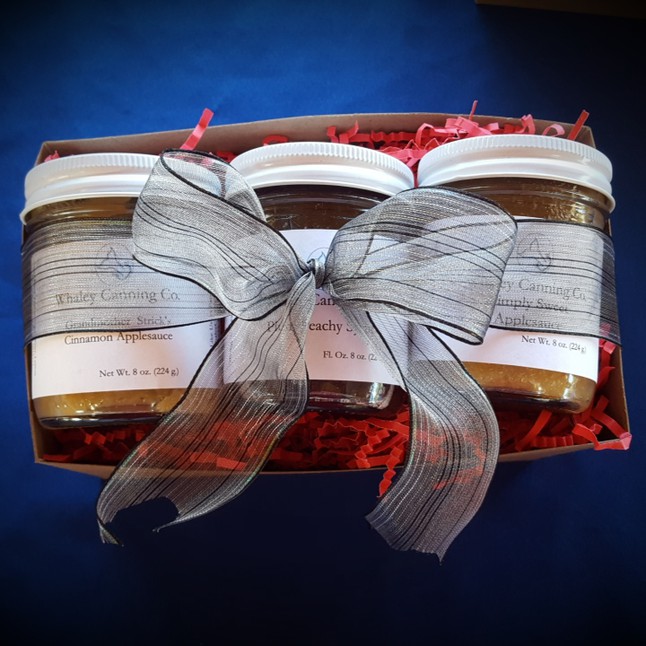
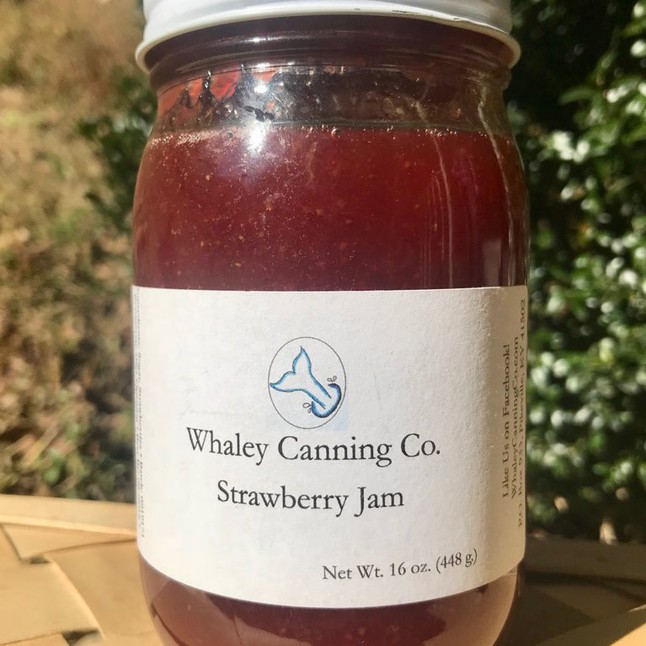
What goes better with baked goods than jams, jellies, and syrups? The Pikeville Market has helped other young entrepreneurs become thriving businesses.  Such as Whitney Whaley, of Whaley Canning Co., started her business just this year after a whirlwind tour of classes and certifications. Whitney was looking for a cottage industry she could do soon after moving to Pikeville and hit upon canning and selling fruit sauces and syrups using old family recipes, like Grandma Strick’s Apple Sauce.

After attending UK’s Food Innovation Center’s Better Process Control School, offered this past spring at the Eastern Kentucky Farmer Conference, Whitney was able to commercially process her products using the commercial kitchen at the Floyd County Extension Office. She met up with Joyce Pinson of the Pikeville Farmers Market who convinced her to sell her products at the market. Business was so good that now, less than one year from starting, Whitney has her products in several local retail stores as well as on her own online store.

A little closer to I-75, in Hazard, you will find Emily Whitaker who like most of us, loves coffee. She loves it so much that when offered a coffee roaster with all the trimmings, she remodeled half of her basement to install a manufacturing kitchen so she could sell locally roasted coffee. Windy Hills Coffee, roasted in Viper, Kentucky made its debut at events in and around Hazard including creating a special blend for an event in Hazard called A Seat at The Table-India where community members can come together and share a meal from a different culture. The reception was so good that Windy Hills coffee can now be found in retail outlets in Hazard and soon to be found in Prestonsburg and Whitesburg too. As market manager for the Perry County Farmers’ Market, Emily’s connection with farmers opened another avenue when farmer friends started adding Windy Hills coffee as a specialty item to their CSA shares.

As noted earlier, farmers’ markets have been entry level opportunities for farmers to sell their products. Most market vendors expand their businesses, like Benette, by having customers come to the farm or like Whitney and Emily through retail markets. But, a few vendors make the scary leap to brick and mortar establishments.

Kristin Smith raises heritage beef and pastured pork in Whitley County on Falkner Bent Farm. She started selling her premium meat products at the Whitley County Farmers Market but sales were slow. “I couldn’t drop my prices so I decided to make tacos so people could taste the difference in my product and buy it. Pork belly tacos. Brisket tacos. Whatever cut wasn’t moving. And it worked. I sold out every week”, she told me in an interview earlier this year.

The Whitley County market vendors became a really tight group and it wasn’t long before they decided they had all they needed, bread, produce and meat, to open a brick and mortar restaurant. And soon the popular Wrigley Taproom and Eatery, a farm to table restaurant in Corbin, Kentucky, was established.


The newest entrepreneurs to using a farmers’ markets as a springboard into business are Lisa and Amy Bourque of Acres of Grace Farm and Bakery in Clay County. Lisa and Amy have been farming on Acres of Grace for about eight years. They believe in being as self-sustaining as possible, so gardening was an easy choice for them

They started selling at the Clay County Community Market about four years ago but what’s interesting is that they did not start by selling produce but instead entered the market to sell Lisa’s artwork, “with a small tray of baked apple hand pies” Lisa told me. Once she saw how much the community loved homegrown and homemade food, she decided to pursue her passion for baking.

The Acres of Grace Bakery, located on Big Creek in Clay County opened this past November. When asked why open a restaurant in such a rural area? Lisa replied “because we really wanted to be a part of the community on a larger scale than what we could produce for farmers’ market. People were asking for our food during the market off season as well so we felt like it was time to take the plunge and fulfill my dreams of opening a small place and do some farm to table for our small area.”

Like Kristin Smith at the Wrigley Taproom and Eatery, the Bourques’ use as much locally sourced food as possible in their meals. When asked why they would open a restaurant on a two-lane road in the middle of one of the poorest counties in the United States, Lisa replied, “Feeding people makes us happy and working side by side makes us even happier. Providing a healthier alternative to our small community is a bonus.”

“Putting your money, where your zip code is” has really been a game changer for folks interested in doing farm to table. Most of the farmers that I worked with at the Floyd County Farmers’ Market, six years ago, grew produce, brought it to the market to sell and went home to get ready for their off-farm job because there wasn’t enough interest in purchasing locally grown food, to make a living.

But farmers’ markets have increased in number and size in the last several years across the Commonwealth. And thanks to the agriculture departments at the University of Kentucky and Kentucky State University, their extension agents, the Kentucky Department of Agriculture’s Kentucky Proud program, and the Farmers Market Support Program of Community Farm Alliance, more and more vendors are becoming entrepreneurs.

Are you a vendor at a Kentucky farmers market? Are you interested in growing your market and your business? Why not check out the Farmers Market Support Program page on our website. Or look into attending the 2018 Eastern Kentucky Farmer Conference February 23rd and 24th. We are Community Farm Alliance where Farm is Foundation.


Uncategorized

Breaking Beans Radio Show #23: Southdown, Victuals and Dancin’

Aired: December 6, 2017

This month, Sister Kathy visits Seth and Sheryl Long at Southdown Farm in Letcher County and learns about Kentucky maple syrup. And she talks with Appalachian Transition Fellow, Abby Huggins, about her work on the Appalachian Food and Dance Trail for Hindman Settlement School. Sister Kathy wraps up this show with Ronni Lundy, author of Victuals: An Appalachian Journey, with Recipes, the James Beard award winner for Book of the Year, about her work with the Appalachian Food Summit.


Southdown Farms, Sheryl Long

Abby Huggins, Hindman Settlement School

Ronni Lundy, author of Victuals: An Appalachian Journey, with Recipes (photo credits, below)

Photo Credits: Headshot of Ronni Lundy, Pableaux Johnson, Citizen Times article Source: http://www.citizen-times.com/story/news/local/2017/04/26/ronni-lundy-wins-2-james-beard-awards/100924058/


Find other episodes and Breaking Beans stories here:

http://cfaky.org/blog

Download this and other past episodes here:

https://archive.org/details/@breakingbeans

The Breaking Beans Variety Radio Show airs on 88.7 WMMT (online too!) the first Wednesday of every month at 6pm featuring stories, interviews, recipes, and news from the food and farming worlds in the Appalachian region!

Hosted by Breaking Beans Fellow Sister Kathy Curtis.


breakingbeansWEBsm

Breaking Beans: The Appalachian Food Story Project is an initiative of Community Farm Alliance to tell the story of how local food and farming in Eastern Kentucky can contribute to a bright future in the mountains. Eastern Kentucky is at the point where it can foster a food system that is equitable and accessible to all, provides fresh nutritious food, and serves as an economic generator that builds community wealth. With a rich history of food and farming, stories of how Eastern Kentucky is already growing in that direction – and the challenges along the way – are important for informing people and policy alike.

Uncategorized

Breaking Beans Radio Show #22: Cornmeal, Tamworth Swine, and Dry Land Fish

Aired: 11/01/2017

In tonight’s show we visit with JR Damron, grist mill owner from EK3 Farm in Virgie, KY. Then Sister Kathy talks with Tim Sanders, who raises heritage pork, beef, chicken and goat varieties at Indian Creek Settlement Farm in Letcher County. Lastly, this episode closes with Neil Hunt, heirloom vegetable and dry land fisherman from Oppossum Fork Mini-farm in Racoon, KY.  These are not your typical corn, bean and tomato guys, so you won’t want to miss their stories.


Find other episodes and Breaking Beans stories here:

http://cfaky.org/blog

Download this and other past episodes here:

https://archive.org/details/@breakingbeans

The Breaking Beans Variety Radio Show airs on 88.7 WMMT (online too!) the first Wednesday of every month at 6pm featuring stories, interviews, recipes, and news from the food and farming worlds in the Appalachian region!

Hosted by Breaking Beans Fellow Sister Kathy Curtis.


breakingbeansWEBsm

Breaking Beans: The Appalachian Food Story Project is an initiative of Community Farm Alliance to tell the story of how local food and farming in Eastern Kentucky can contribute to a bright future in the mountains. Eastern Kentucky is at the point where it can foster a food system that is equitable and accessible to all, provides fresh nutritious food, and serves as an economic generator that builds community wealth. With a rich history of food and farming, stories of how Eastern Kentucky is already growing in that direction – and the challenges along the way – are important for informing people and policy alike.